Chemistry · Ch 1 — Solid State
Cubic system
Cubic system
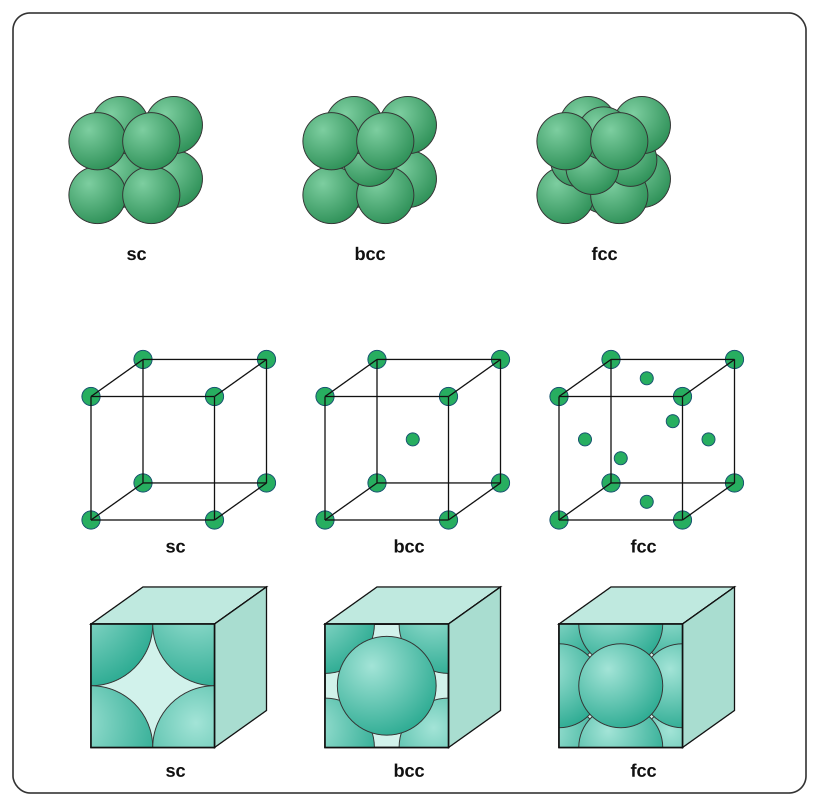
In the cubic crystal system all three edge lengths are equal () and all three interaxial angles are . The cubic system has three possible kinds of unit cell:
i. Simple cubic unit cell (sc) : particles are present at the eight corners of the cube only.
ii. Body-centred cubic unit cell (bcc) : in addition to the eight corner particles, one particle is present at the centre of the cube.
iii. Face-centred cubic unit cell (fcc) : in addition to the eight corner particles, one particle is present at the centre of each of the six faces of the cube.
Drawn by us to help you understand the concept clearly, and verified to make sure it's accurate. For exams, practice from your textbook's own diagram.
What this figure shows. A 3-by-3 panel of nine drawings, each labelled sc, bcc or fcc. Top row -- space-filling clusters of touching spheres: sc has 8 corner spheres, bcc adds one hidden centre sphere, fcc adds face spheres. Middle row -- wireframe cubes with small balls at the lattice points: sc corners only, bcc corners plus one body-centre ball, fcc corners plus six face-centre balls (hidden ones shown by dashed edges). Bottom row -- cutaway cubes showing only the portions of the spheres lying inside the cell: corner octants for sc, corner octants plus a who …
…