Biology · Ch 4 — Animal Kingdom
Phylum – Hemichordata
Phylum – Hemichordata
This phylum was once treated as a sub-phylum within the phylum Chordata, but it is now recognised as a separate phylum placed among the non-chordates. The reason for the earlier grouping is that hemichordates possess a rudimentary structure in the collar region called a stomochord, which resembles the notochord of chordates but is not a true notochord.
General features
The phylum is a small group of worm-like marine animals that show an organ-system level of organisation.
Symmetry, layers and cavity
- They are bilaterally symmetrical.
- They are triploblastic.
- They are coelomate, with a true body cavity.
Body plan
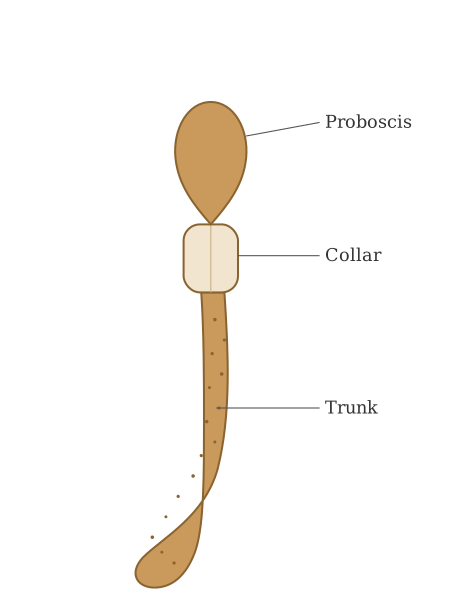
The body is cylindrical and is made up of three regions: an anterior proboscis at the front, a collar behind it, and a long trunk making up the rest of the body.
Circulation, respiration and excretion
- The circulatory system is of the open type.
- Respiration takes place through gills. …
Drawn by us to help you understand the concept clearly, and verified to make sure it's accurate. For exams, practice from your textbook's own diagram.
This is Balanoglossus, a worm-like marine animal placed in Hemichordata, a small group once linked with chordates. Its soft, bilaterally symmetrical body is clearly divided into three regions: a front proboscis shaped like an acorn, a short collar behind it, and a long trunk making up the rest of the body. These animals live burrowed in sand or mud on the sea floor. They are triploblastic and coelomate and possess pharyngeal gill slits used in respiration. Because they lack a true notochord, they are kept separate from …