Biology · Ch 4 — Animal Kingdom
Phylum – Mollusca
Phylum – Mollusca
Molluscs form the second largest phylum in the animal kingdom. They are found on land as well as in water, whether marine or fresh water, and they show an organ-system level of organisation.
Symmetry, layers and cavity
- They are bilaterally symmetrical.
- They are triploblastic.
- They are coelomate, having a true body cavity.
Shell, body regions and the mantle
The body is covered by a shell made of calcium (a calcareous shell) and is unsegmented. It is clearly divided into a distinct head, a muscular foot and a visceral hump. A soft, spongy layer of skin, called the mantle, spreads over the visceral hump. Between the hump and the mantle lies a space known as the mantle cavity, which contains feather-like gills that serve both respiration and excretion.
Head, sensory tentacles and feeding
The head region at the front bears sensory tentacles. The mouth holds a file-like rasping organ used in feeding, called the radula, which scrapes food.
Reproduction
- They are usually dioecious, with separate sexes.
- They are oviparous, laying eggs. …
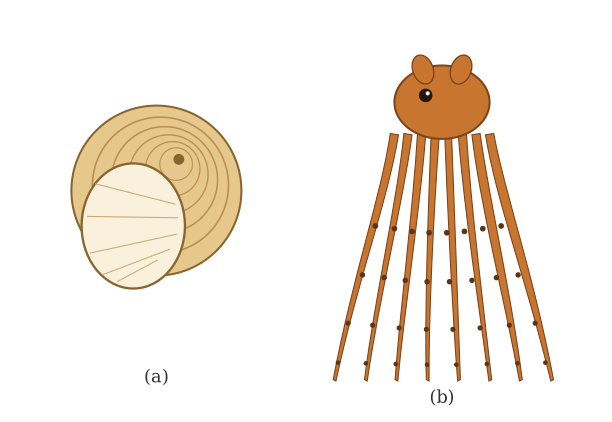
Drawn by us to help you understand the concept clearly, and verified to make sure it's accurate. For exams, practice from your textbook's own diagram.
These are molluscs of phylum Mollusca, the second largest animal phylum. They have soft, unsegmented bodies that are usually protected by a hard calcareous shell, though in some the shell is reduced or internal. The body typically has a muscular foot used for movement, a visceral hump holding the organs, and a fold of skin called the mantle that secretes the shell. Inside the mouth is a rasping, file-like feeding organ called the radula. They are bilaterally symmetrical, triploblastic and coelomate. Pila, the apple snail, carries a coiled s …