Political Science · Ch 6 — Judiciary
Structure of the Judiciary
Structure of the Judiciary
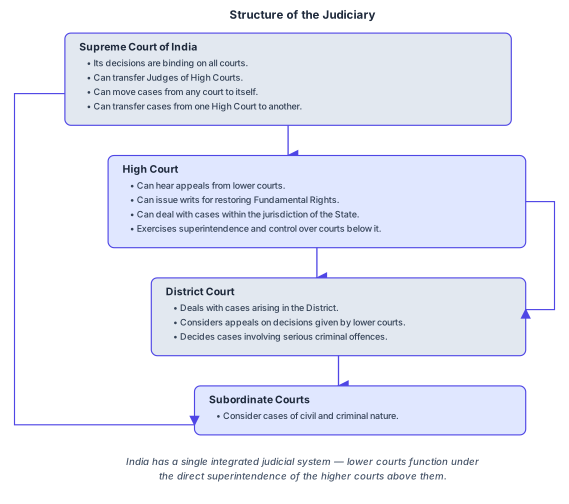
The Constitution of India sets up a single integrated judicial system. Unlike some other federal countries, where each state runs its own separate court system alongside a federal one, India has no separate State courts — one judicial hierarchy serves the whole country, applying both Union and State laws.
Drawn by us to help you understand the concept clearly, and verified to make sure it's accurate. For exams, practice from your NCERT textbook's own diagram.
Pyramidal structure of the Indian judiciary: Supreme Court of India at the apex, followed by the High Court, District Court and Subordinate Courts, each level listing its own powers under the single integrated judicial system. Own-illustrated for this platform from the real NCERT page's own facts (composition, labels, and content are recreated; the specific artistic rendering of any …
That hierarchy is pyramidal, and each lower level functions under the direct superintendence of the level above it:
- Supreme Court of India — at the apex. Its decisions bind every court in the country. It can transfer judges between High Courts, move a case from any court to itself, and transfer a case from one High Court to another.
- High Courts — one or more per State (or shared across States/Union Territories). A High Court hears appeals from the courts below it, can issue writs to restore Fundamental Rights, handles cases within its State's jurisdiction, and exercises superintendence and control over every court below it.
- District Courts — handle cases arising within the district, hear appeals against decisions of the lower courts under them, and decide serious criminal offences.
- Subordinate Courts — the base of the pyramid, hearing cases of a civil and criminal nature in the first instance. …