Computer Science · Ch 3 — Emerging Trends
Big Data
Big Data
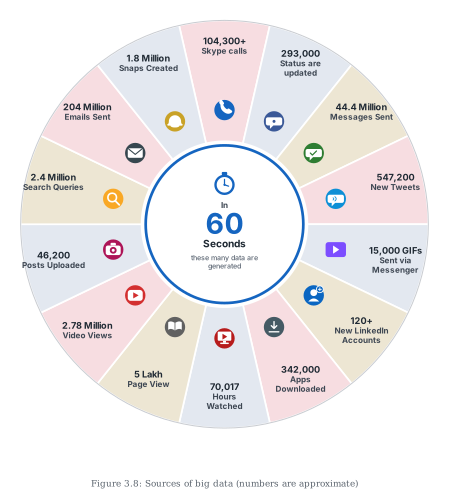
Technology has entered almost every sphere of our lives — and as a result, data is being produced at a colossal rate. There are now over a billion Internet users, and the majority of the world's web traffic comes from smartphones. At the current pace, around 2.5 quintillion bytes of data are created every day (Figure 3.8 illustrates the many sources contributing to this flood), and the pace keeps rising as the Internet of Things (IoT) continues to grow.
What is Big Data?
This explosion produces data sets of such enormous volume and complexity that they are given their own name: Big Data. The defining problem is that such data cannot be processed and analysed using traditional data processing tools — for two reasons:
- It is voluminous — simply too large for conventional tools.
- It is largely unstructured — it does not fit neatly into rows and columns. Examples of this unstructured flow include:
- social media posts, instant messages and chats
- photographs shared through various sites
- tweets and blog articles
- news items, opinion polls and the comments on them
- audio and video chats
The challenges Big Data brings
Big Data is not only about size. Working with it raises a whole set of connected challenges:
- integration of data from many sources
- storage
- analysis
- searching
- processing
- transfer
- querying
- visualisation
Why bother? The value hidden inside …
Drawn by us to help you understand the concept clearly, and verified to make sure it's accurate. For exams, practice from your NCERT textbook's own diagram.
This circular infographic answers a striking question: how much data does the online world generate in just 60 seconds? At the centre sits a blue stopwatch labelled "In 60 Seconds these many data are generated", and around it a ring of pastel pie-slice sectors, each carrying the icon of a familiar platform and its approximate per-minute figure (the caption itself notes the numbers are approximate):
- 104,300+ Skype calls
- 293,000 status updates on Facebook
- 44.4 million WhatsApp messages sent
- 547,200 new tweets on Twitter
- 15,000 GIFs sent via Messenger
- 120+ new LinkedIn accounts
- 342,000 apps downloaded from app stores
- 70,017 hours watched on Netflix
- 5 lakh Wikipedia page views
- 2.78 million YouTube video views
- 46,200 posts uploaded on Instagram
- 2.4 million Google search queries
- 204 million emails sent
- 1.8 million snaps created on Snapchat …