Question 24 of 48
Q.Distinguish between:
Unitary elastic demand and Relatively elastic demand
Maharashtra MsbshseMaharashtra HSC (MSBSHSE) Board 2023Subjective· 2mImportance★★★★★
50% · 24/48 Questions
You're viewing a preview — the full solution, concept, methods & PYQ mapping are locked.
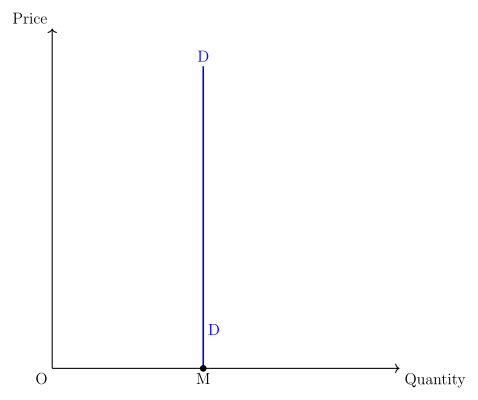
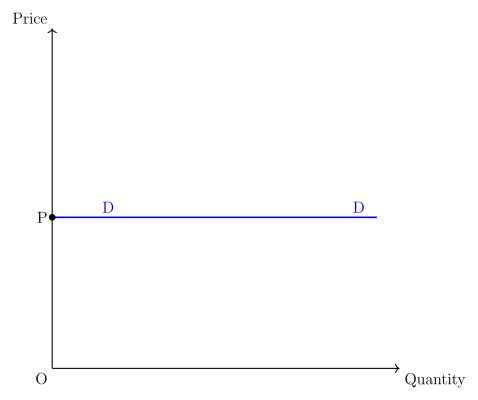
Start your 14-day free trial to unlock the full solution →Unitary elastic demand (Ed = 1) means quantity changes in the same proportion as price; relatively elastic demand (Ed greater than 1) means quantity changes more than proportionately to price. They differ in coefficient, in the shape/slope of the demand curve and in the type of goods to which they apply.
Both are measures of how sensitive the quantity demanded of a good is to a change in its own price, but the degree of that response is different.
| Basis | Unitary elastic demand | Relatively elastic demand |
|---|---|---|
| Meaning | Quantity demanded changes exactly in the same proportion as price | Quantity demanded changes more than proportionately to a change in price |
| Coefficient (Ed) | Ed = 1 | Ed greater than 1 |
| Proportion | %ΔQ = %ΔP | %ΔQ is greater than %ΔP |
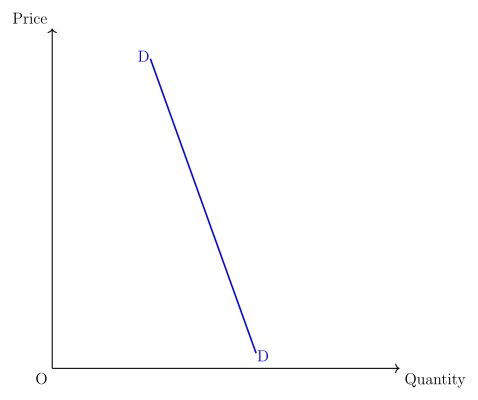
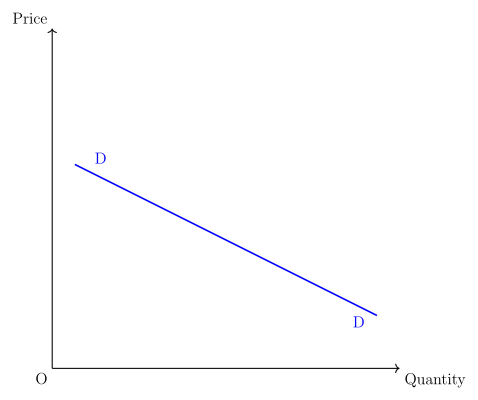
| Shape of curve | Rectangular hyperbola | Flatter (gently sloping) demand curve |
| Example | A rare, theoretical / borderline case | Comforts and luxuries (air conditioners, branded goods) |
Unlock everything free for 14 days
- Full step-by-step solutions
- Concept-first explanations
- Methods, shortcuts & mistakes
- PYQ mapping + timed mock tests
Full access for 14 days. No credit card required.