Q.Explain the types of price elasticity of demand.
You're viewing a preview — the full solution, concept, methods & PYQ mapping are locked.
Start your 14-day free trial to unlock the full solution →Price elasticity of demand (Ed) is the degree to which quantity demanded responds to a change in price, measured as Ed = percentage change in quantity demanded / percentage change in price. Depending on this value there are five types, explained below.
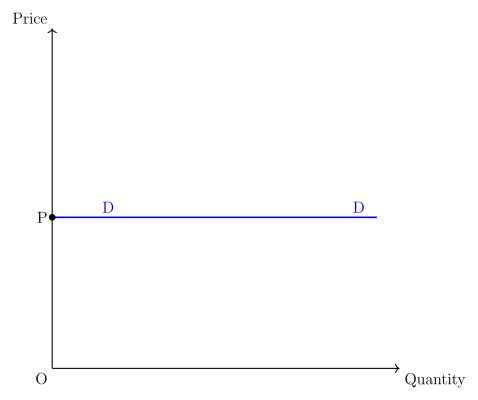
1. Perfectly elastic demand (Ed = infinity): At a given price the consumer is willing to buy any quantity, but the slightest rise in price makes demand fall to zero. The demand curve is a horizontal straight line parallel to the X-axis. It is an imaginary/theoretical case.
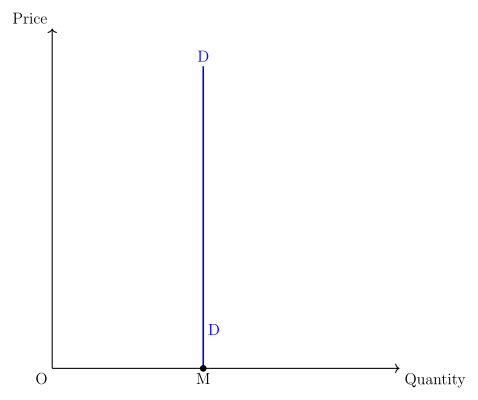
2. Perfectly inelastic demand (Ed = 0): The quantity demanded remains exactly the same whatever the change in price. The demand curve is a vertical straight line parallel to the Y-axis. This too is an extreme, theoretical case (nearest real example: an absolute life-saving necessity).
3. Unitary elastic demand (Ed = 1): The percentage change in quantity demanded is exactly equal to the percentage change in price. The demand curve is a rectangular hyperbola. Total expenditure of the consumer remains unchanged when price changes.
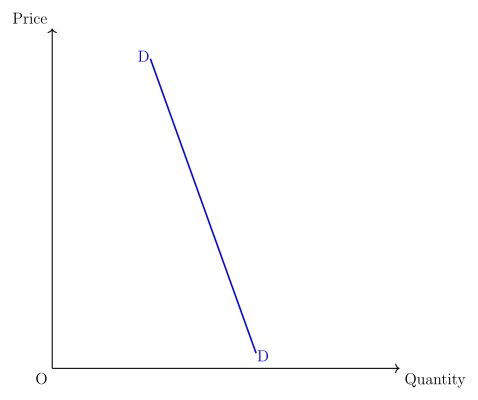
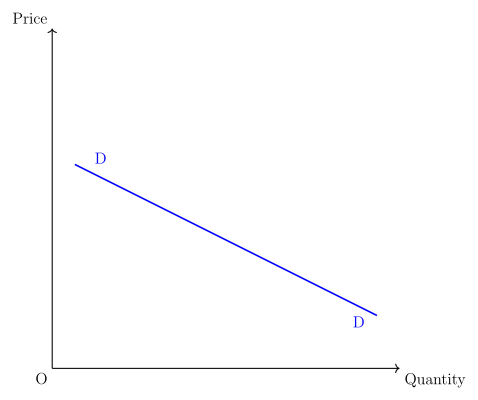
4. Relatively elastic demand (Ed greater than 1): The percentage change in quantity demanded is greater than the percentage change in price — a small fall in price causes a large rise in quantity demanded. The demand curve is flatter (more horizontal). This is typical of luxuries and goods with many substitutes.
…
Unlock everything free for 14 days
- Full step-by-step solutions
- Concept-first explanations
- Methods, shortcuts & mistakes
- PYQ mapping + timed mock tests
Full access for 14 days. No credit card required.