Q.Write a note on Vaccination.
Vaccination is administering a safe form of a pathogen (protein/sugar fragment, killed/attenuated organism, or toxoid) so the immune system learns to recognise it and responds much faster if the real infection occurs...
Step 1. Vaccination is the administration of a vaccine — an inactivated pathogen, or an antigenic part of one — to protect against that specific pathogen.
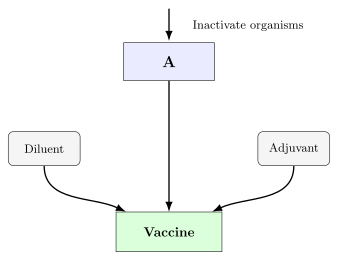
Step 2. It works by exposing the body to a safe version of the pathogen, which may be a protein/sugar fragment from it, a dead or inactivated form of it, a toxoid (an inactivated version of a toxin it produces), or a weakened (attenuated) live pathogen.
Step 3. When the body responds to this safe exposure, it mounts a genuine adaptive immune response — producing antibodies and priming memory B- and T-cells — without the person having to suffer the actual disease.
Step 4. If the real pathogen is encountered later, this primed immune memory allows a much faster and stronger response, often preventing illness altogether. Vaccination is a form of primary prevention, rigorously tested for safety, and has brought diseases like measles, polio, tetanus and whooping cough under control — protecting not just the vaccinated individual but, through reduced transmission, the wider community too.
Administering a safe form of a pathogen to prime the immune system's memory, giving faster, stronger protection against a later real infection, without causing the disease itself
Unlock everything free for 14 days
- Full step-by-step solutions
- Concept-first explanations
- Methods, shortcuts & mistakes
- PYQ mapping + timed mock tests
Full access for 14 days. No credit card required.