Chemistry · Ch 12 — Aldehydes, Ketones and Carboxylic Acids
Introduction
Introduction
The previous chapter dealt with organic compounds containing a carbon-oxygen SINGLE bond (alcohols, ethers). This chapter turns to compounds containing a carbon-oxygen DOUBLE bond, >C=O, called the carbonyl group -- one of the most important functional groups in the whole of organic chemistry, because it underlies three related families studied together here: aldehydes, ketones, and carboxylic acids. Both aldehydes and ketones contain the carbonyl group as their defining functional group and are together called carbonyl compounds. Carboxylic acids go one step further: their -COOH ('carboxyl') group is a carbonyl carbon that ALSO carries an -OH, and this extra -OH is what gives carboxylic acids their own distinct, markedly acidic chemistry, setting them apart from plain aldehydes and ketones even though all three families share the same carbonyl core. The chapter builds up, in order, how these three families are classified by carbon skeleton, how they are named (trivial and IUPAC), how each is prepared, their physical properties, why the carbonyl carbon is chemically reactive (its polarity), the full range of characteristic reactions of aldehydes/ketones, and finally the characteristic reactions of the -COOH group itself.
Drawn by us to help you understand the concept clearly, and verified to make sure it's accurate. For exams, practice from your textbook's own diagram.
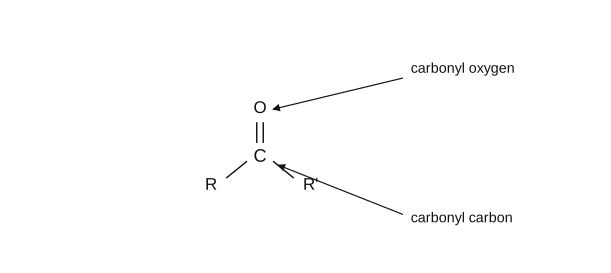
What this figure shows. A generic carbonyl group drawn as a carbon doubly bonded to oxygen, with two further substituents R and R' attached to the carbonyl carbon, labelling the doubly-bonded oxygen as the 'carbonyl oxygen' and the central carbon as the 'carbonyl carbon'. This is the chapter's opening legend figure for the >C=O functional group shared by aldehydes and ketones.
12.1-intro: The carbonyl group.