Chemistry · Ch 13 — Amines
Reactions of arene diazonium salts
Reactions of arene diazonium salts
Aryl diazonium salts, once formed (section 13.6.6b), show two genuinely distinct types of further reaction, depending on whether the diazonium group itself is ultimately kept or lost. The first type, covered in 13.7.1, is nucleophilic substitution in which the whole diazonium group is DISPLACED and lost (as nitrogen gas) while a new group takes its place on the ring. The second type, covered in 13.7.2, is electrophilic aromatic substitution in which the diazonium group is instead RETAINED intact, and the aryl diazonium salt itself acts as the electrophile attacking …
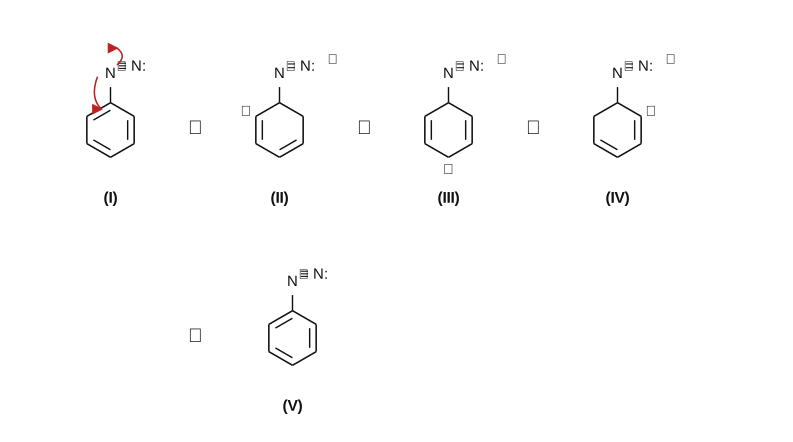
Drawn by us to help you understand the concept clearly, and verified to make sure it's accurate. For exams, practice from your textbook's own diagram.
Why aryl diazonium salts survive at 0-5 °C. The positive charge of Ar-N2⊕ is delocalized over the nitrogen pair and the ortho/para ring carbons across five contributing structures — enough stabilization to make the aromatic diazonium salt an isolable (cold) intermediate, whe …