Q.Explain the structure and life cycle of Entamoeba histolytica with the help of neat and labelled diagrams.
You're viewing a preview — the full solution, concept, methods & PYQ mapping are locked.
Start your 14-day free trial to unlock the full solution →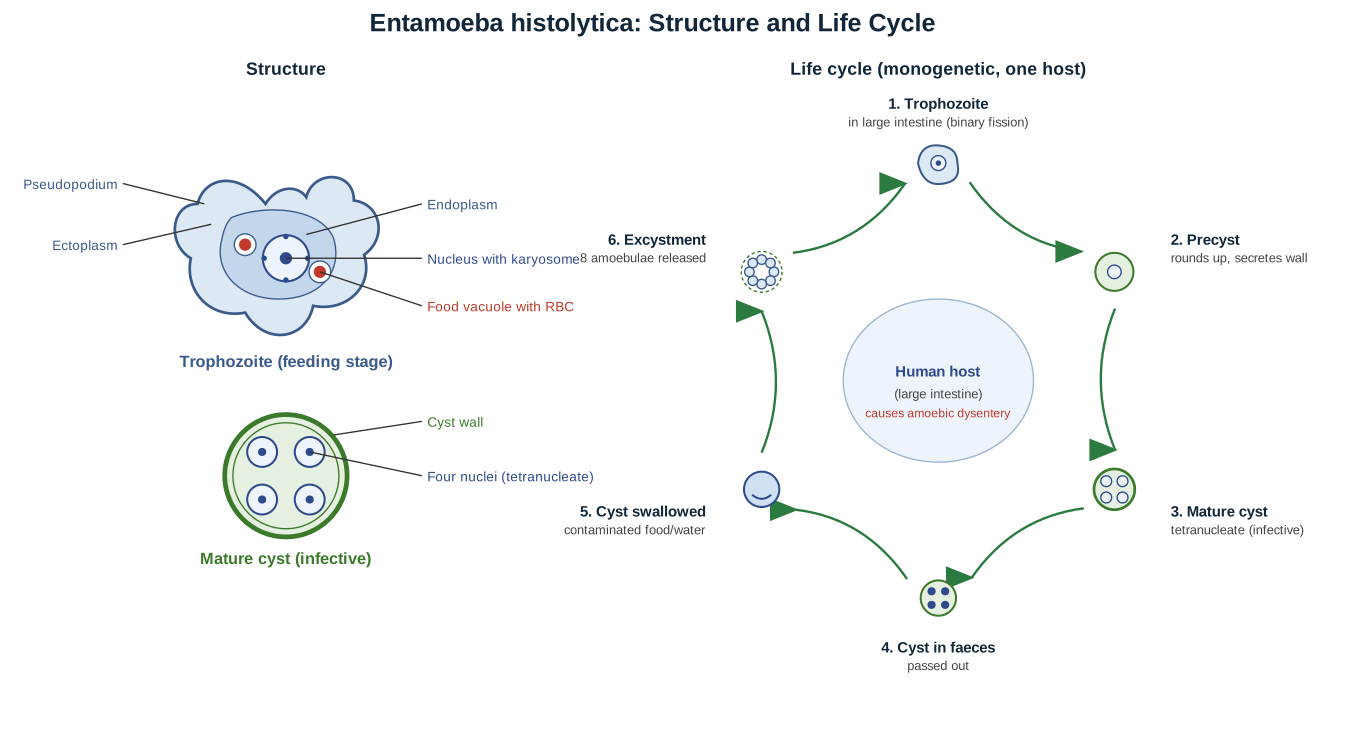
Entamoeba histolytica is a monogenetic gut parasite of humans causing amoebic dysentery; it has a trophozoite (feeding) stage and a resistant cyst stage, and spreads by cysts through contaminated food and water.
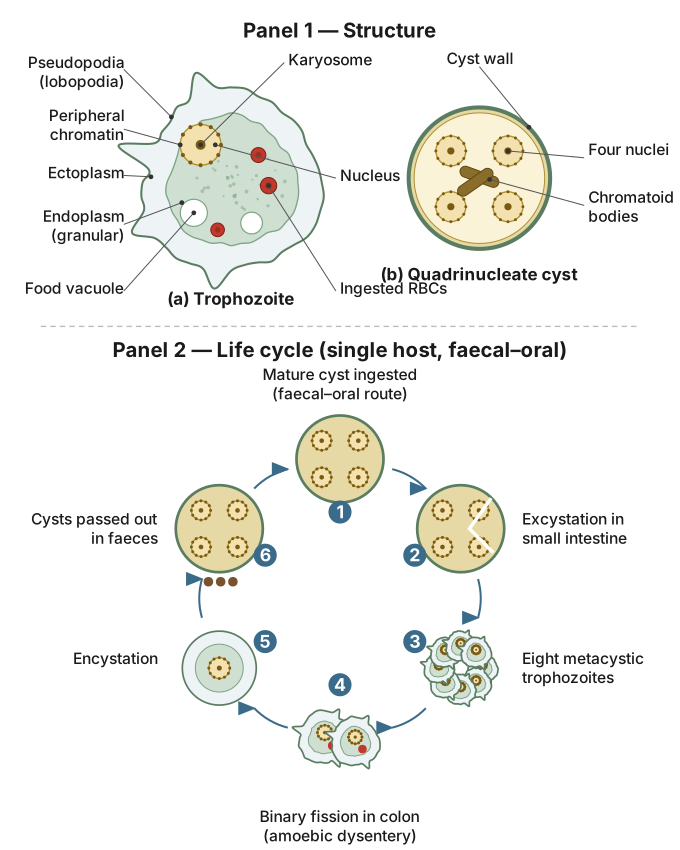
(Diagrams to be drawn and labelled: (1) the TROPHOZOITE - showing ectoplasm, endoplasm, pseudopodia, a single nucleus with a central karyosome, and food vacuoles with ingested RBCs; (2) the mature CYST - a rounded, four-nucleate (tetranucleate) cyst with a cyst wall; and (3) the LIFE-CYCLE stages in sequence.)
Structure of Entamoeba histolytica:
- It is an endoparasitic protozoan living in the large intestine (colon) of humans.
- The trophozoite (active, feeding form) is amoeboid, with an outer clear ECTOPLASM and inner granular ENDOPLASM.
- It forms blunt PSEUDOPODIA for creeping movement and for engulfing food (including red blood cells and tissue).
- It has a single spherical NUCLEUS with a central karyosome (endosome) and peripheral chromatin.
- It has food vacuoles but NO contractile vacuole (being a parasite in an isotonic medium).
Life cycle (monogenetic - completed in a single host, man):
- Trophozoite stage:
-
The trophozoites live in the wall/lumen of the large intestine, feed on the mucosa and RBCs, cause ulcers, and multiply by binary fission. This produces amoebic dysentery (blood and mucus in stools).
- Encystment (cyst formation):
-
Some trophozoites become rounded, throw out food, and secrete a resistant CYST WALL around themselves, forming a precyst.
-
Within the cyst the nucleus divides twice to form a mature TETRANUCLEATE (four-nucleate) cyst - the infective stage.
- Transmission:
-
The mature cysts pass out with the FAECES of the patient.
-
Through contaminated food, water or hands (poor sanitation; house flies may act as carriers), the cysts are SWALLOWED by a healthy person.
- Excystment and multiplication: …
Unlock everything free for 14 days
- Full step-by-step solutions
- Concept-first explanations
- Methods, shortcuts & mistakes
- PYQ mapping + timed mock tests
Full access for 14 days. No credit card required.