Numerical · Q22
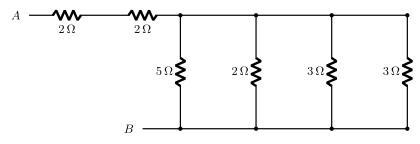
Q.In the network shown, and are connected in parallel; this combination is joined in series with ; and the whole series combination is then connected in parallel with . Find the equivalent resistance of the complete network.
West Bengal WbchseTextbookSubjectiveImportance★★★★★
40% · 22/55 Questions
✓ Free question
Given , (parallel), then in series with , the whole thing in parallel with .
Step 1 ():
Step 2 (series with ):
Step 3 (parallel with ):
✓Final answer
The equivalent resistance of the complete network is .
Unlock everything free for 14 days
- Full step-by-step solutions
- Concept-first explanations
- Methods, shortcuts & mistakes
- PYQ mapping + timed mock tests
Full access for 14 days. No credit card required.