Numerical · Q34
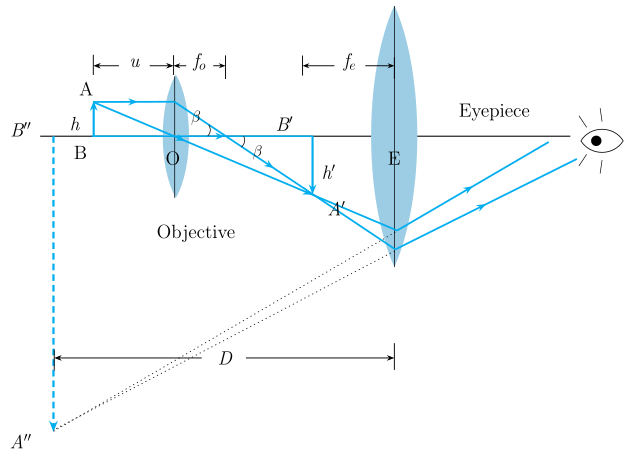
Q.A compound microscope has an objective of focal length and an eyepiece of focal length , with the two lenses separated so that the objective forms its image at a distance from the eyepiece. If the final image is formed at the near point () of a normal eye, calculate the magnifying power of the microscope using .
West Bengal WbchseTextbookSubjectiveImportance★★★★★
57% · 34/60 Questions
You're viewing a preview — the full solution, concept, methods & PYQ mapping are locked.
Start your 14-day free trial to unlock the full solution →Using the standard compound-microscope formula, , with , , and : first, (this factor is the objective's own contribution — a real, already-magnified intermediate image); second, (this factor is the …
Unlock everything free for 14 days
- Full step-by-step solutions
- Concept-first explanations
- Methods, shortcuts & mistakes
- PYQ mapping + timed mock tests
Full access for 14 days. No credit card required.