Biology · Ch 2 — Reproduction in Lower and Higher Animals
Menstrual Cycle (Ovarian Cycle)
Menstrual Cycle (Ovarian Cycle)
The menstrual cycle, also called the ovarian cycle, is a characteristic feature of primates, including humans. It involves a series of cyclic changes in the ovary and in the female reproductive tract — mainly the uterus — occurring under the influence of gonadotropins and the ovarian hormones respectively. Cycles repeat with a periodicity of approximately 28 days, and the middle of each cycle is marked by the release of an egg, coming alternately from one of the two ovaries in successive cycles. The cycle is divided into four phases:
a. Menstrual phase
b. Proliferative phase / Follicular phase / Post menstrual phase
c. Ovulatory phase
d. Secretory phase / Luteal phase
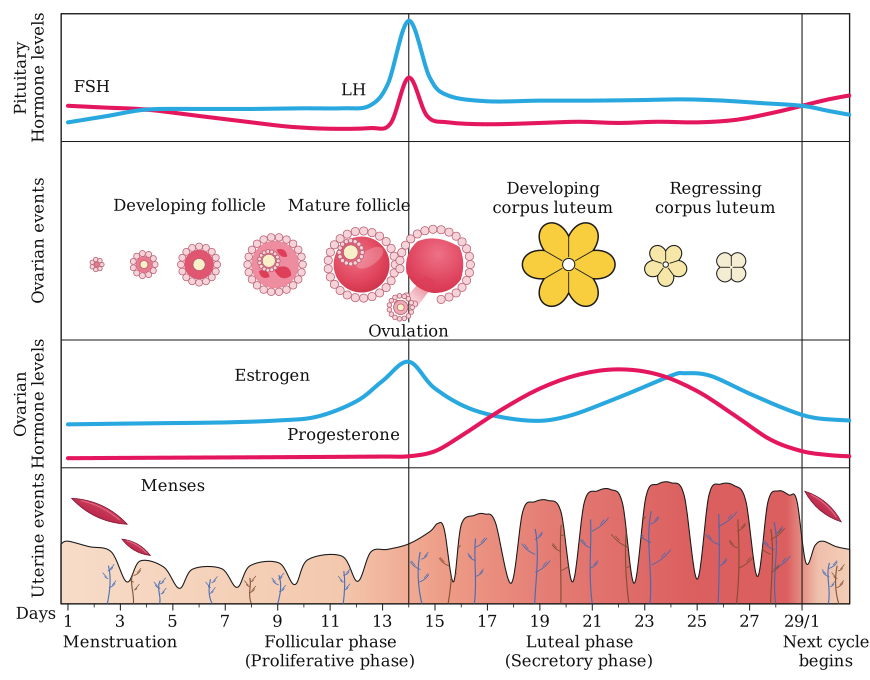
Drawn by us to help you understand the concept clearly, and verified to make sure it's accurate. For exams, practice from your textbook's own diagram.
What this figure shows. The four bands of the textbook's Fig. 2.8 on a shared days axis: pituitary FSH and LH (with the LH surge at ovulation on day 14), the ovarian cycle (follicular phase, ovulation, luteal phase), the ovarian hormones (estrogens rising in the follicular phase, progesterone in the luteal phase) and the uterine cycle with menses, the …
…