Biology · Ch 2 — Reproduction in Lower and Higher Animals
Placenta
Placenta
The placenta is a flattened, discoidal organ formed within the uterus of a pregnant woman, providing a temporary structural and functional connection between the foetal and maternal circulations. It is attached both to the wall of the uterus and to the baby's umbilical cord, and it facilitates the supply of oxygen, nutrients, hormones and antibodies to the foetus, while also removing carbon dioxide and excretory wastes produced by the foetus.
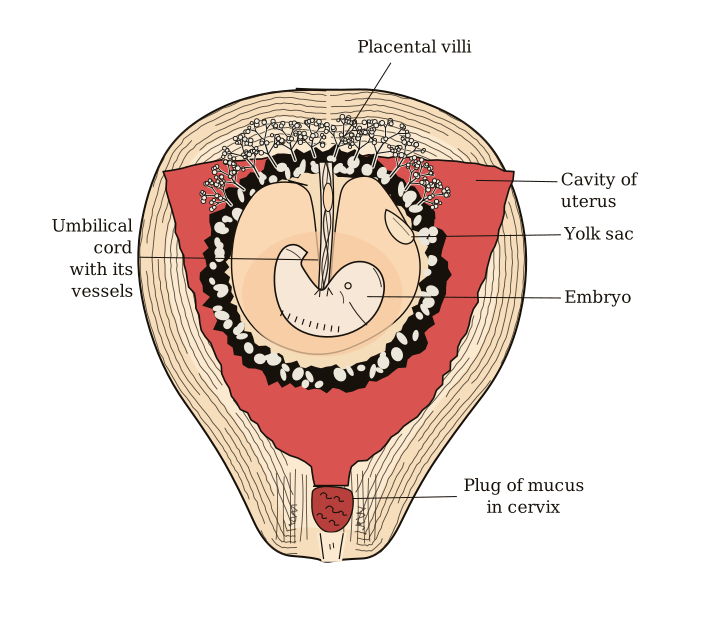
Drawn by us to help you understand the concept clearly, and verified to make sure it's accurate. For exams, practice from your textbook's own diagram.
What this figure shows. The foetus suspended in the amniotic fluid inside the amnion and chorion, joined by the umbilical cord to the disc-shaped placenta on the uterine wall, where the chorionic villi dip into the intervillous spaces filled with maternal blood; these are the structures the textbook's Fig. 2.17 labels (amniotic sac and fluid, chorion, amnion, um …
The placenta is unique among organs in being formed from the tissues of two different individuals — the mother and the foetus. The part contributed by the foetus, called the foetal placenta, is formed by the chorionic villi; the part rich in blood supply, contributed by the mother, is a part of the uterine wall, called the maternal placenta. Because of this dual origin, the human placenta is described as haemochorial. The umbilical cord itself is made of three blood vessels — two smaller arteries carrying blood towards the placenta, and one larger vein returning blood to the foetus.
The placenta also acts as an endocrine tissue, producing hormones including hCG, progesterone and estrogen, while relaxin, in the later phase of pregnancy, is secreted by the ovary. The level of hCG rises until the end of the first trimester and then declines; by the end of the first trimester, progesterone production has shifted to the placenta. All of these hormones are essential for foetal growth and for maintaining the pregnancy.
Know The Institute …