Chemistry · Ch 12 — Aldehydes, Ketones and Carboxylic Acids
Reaction with ammonia: formation of amide
Reaction with ammonia: formation of amide
Carboxylic acids react with ammonia to give, first, an AMMONIUM CARBOXYLATE salt (R-COOH + NH3 gives R-COONH4); this ammonium salt, on FURTHER strong heating at high temperature, decomposes -- losing a molecule of water -- to give the corresponding acid AMIDE: R-COONH4, on strong heating, loses H2O to give R-CONH2. Acid amides can alternatively be prepared a second way, starting instead from an ACYL CHLORIDE reacted directly with ammonia: R-COCl + NH3 gives R-CONH2 + HCl. A 'Do you know?' box works through a slightly more elaborate DIcarboxylic-acid example, phthalic acid, all the way to a cyclic imide: phthalic acid, with 2 NH3 and heat (losing 2 H2O), first gives diammonium phthalate; this, on further heating (losing NH3), gives phthalamide (both -COOH groups now converted to -CONH2); and phthalamide, losing one further molecule of NH3, closes into the five-membered cyclic imide PHTHALIMIDE, in wh …
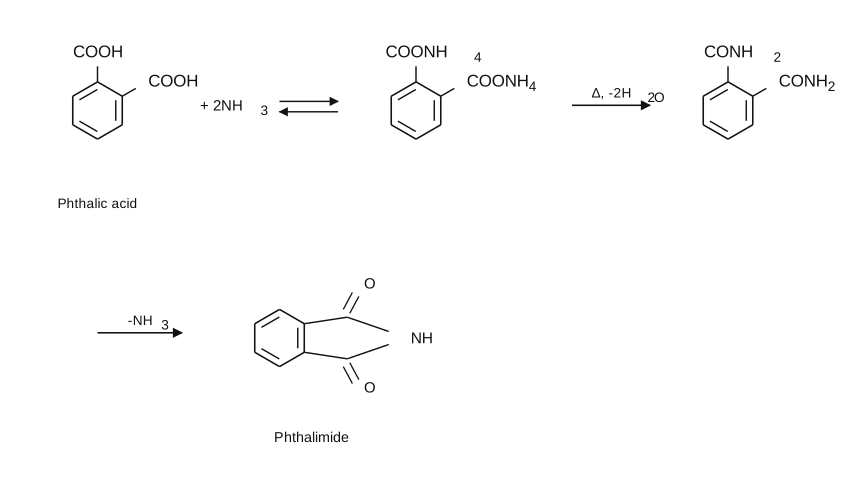
Drawn by us to help you understand the concept clearly, and verified to make sure it's accurate. For exams, practice from your textbook's own diagram.
From acid to imide. Both -COOH groups of phthalic acid form ammonium salts with ammonia; heating drives out two waters to give the di-amide, and losing one more NH3 closes the five-membered imide ring — phthalimide, w …