Chemistry · Ch 9 — Coordination Compounds
Monodentate ligands
Monodentate ligands
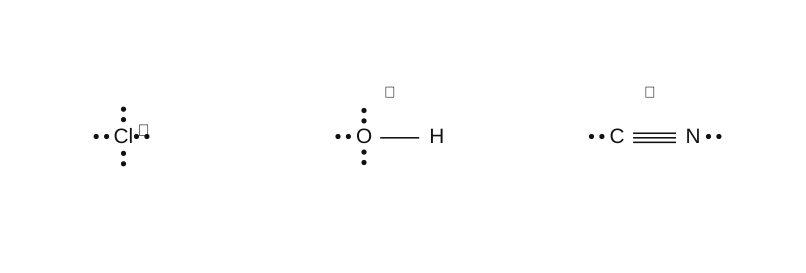
A monodentate ligand has a single donor atom, and that one atom shares one electron pair to form exactly one coordinate bond with the central metal ion. The book's examples are the anionic ligands Cl-, OH- and CN-, whose donor atoms -- chlorine, oxygen and nitrogen respectively -- each carry the lone pair used to bond to the metal (note that in most real coordination compounds CN- coordinates through its carbon atom, but the source text here specifically identifies nitrogen as the listed donor atom for this ligand). Every monodentate ligand contributes exactly one to a complex's total coordination number, which is why, for a complex built entirely from monodentate ligands (like [Co( …
Drawn by us to help you understand the concept clearly, and verified to make sure it's accurate. For exams, practice from your textbook's own diagram.
Lewis structures of the monodentate ligands chloride, hydroxide and cyanide with their lone-pair dots, showing the donor atom of each. Drawn by us from the textbook's own printed facts and verified eleme …