Chemistry · Ch 9 — Coordination Compounds
Polydentate ligands
Polydentate ligands
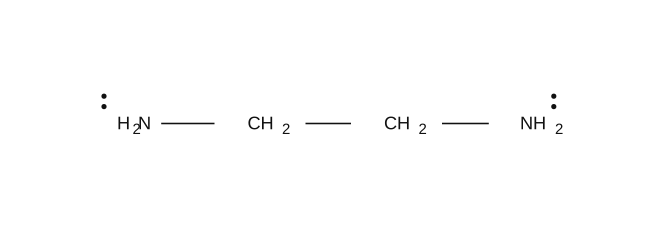
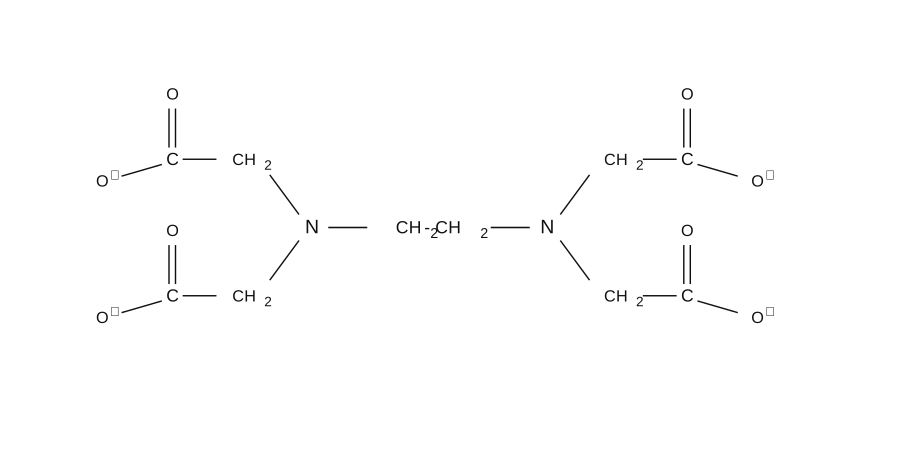
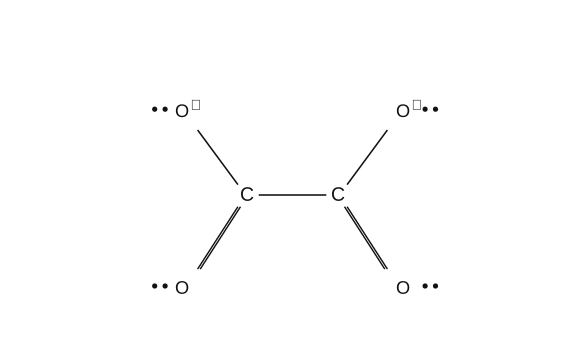
A polydentate ligand has two or more donor atoms, all of which link simultaneously to the SAME central metal ion (this multi-point attachment is called chelation, and the resulting ring-shaped structure is a chelate). Ethylenediamine (abbreviated 'en'), H2N-CH2-CH2-NH2, is bidentate: it binds using the lone pair on each of its two terminal nitrogen atoms, forming a stable five-membered ring with the metal. The oxalate ion, C2O4(2-), is similarly bidentate, using the lone pair on one of its negatively charged oxygen atoms from each of its two carboxylate ends. Ethylenediaminetetraacetate, EDTA(4-), goes further still: it binds a metal ion using the lone pairs on both of its nitrogen atoms plus one lone pair from each of its four negatively charged oxygen atoms, six donor atoms in total, making it hexadentate -- powerful enough to wrap around and effectively encapsulate a single metal ion. This is exactly the chelating ability that makes EDTA useful late …
Drawn by us to help you understand the concept clearly, and verified to make sure it's accurate. For exams, practice from your textbook's own diagram.
What this figure shows. A short two-carbon chain, -CH2-CH2-, capped at each end by an -NH2 group. Each nitrogen carries a lone pair; the molecule binds a metal ion using the lone pair on each of its two terminal nitrogen atoms simultaneously, forming a five-membered chelate ring (M-N-C-C-N) with the metal. It is a neutral bidentate ligand, abbre …
Drawn by us to help you understand the concept clearly, and verified to make sure it's accurate. For exams, practice from your textbook's own diagram.
What this figure shows. A central -N-CH2-CH2-N- backbone (like ethylenediamine) in which each nitrogen additionally carries two -CH2-COO- (acetate) arms. The ion binds a metal ion using the lone pair on each of its two nitrogen atoms plus the lone pair on one negatively charged oxygen of each of its four carboxylate (-COO-) groups, for a total of six donor atoms (2 N + 4 O), making EDTA4- a hexadentate ligand able to wrap around and fully …
Drawn by us to help you understand the concept clearly, and verified to make sure it's accurate. For exams, practice from your textbook's own diagram.
Structure of the oxalate ion C2O4 2- with its two carboxylate groups; the two negatively charged oxygens make it a bidentate ligand. Drawn by us from the textbook's own printed facts and verified eleme …