Chemistry · Ch 15 — Introduction to Polymer Chemistry
Phenol - formaldehyde and related polymers
Phenol - formaldehyde and related polymers
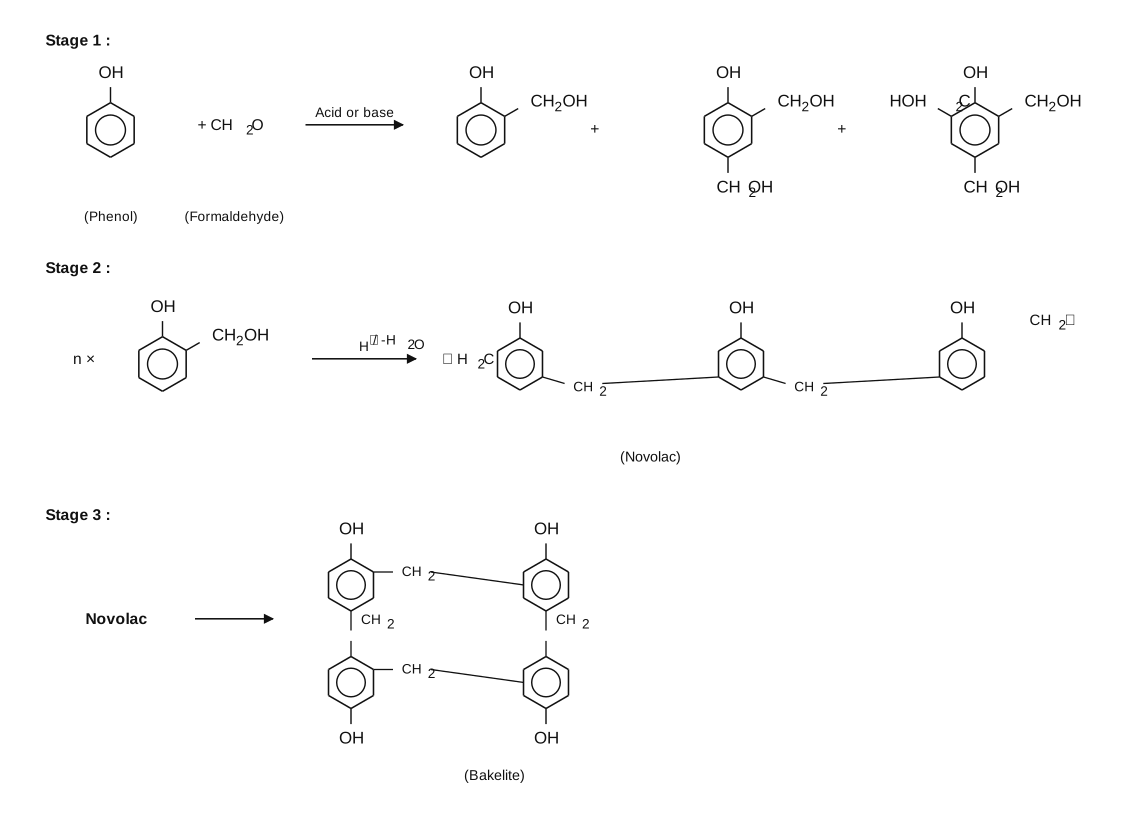
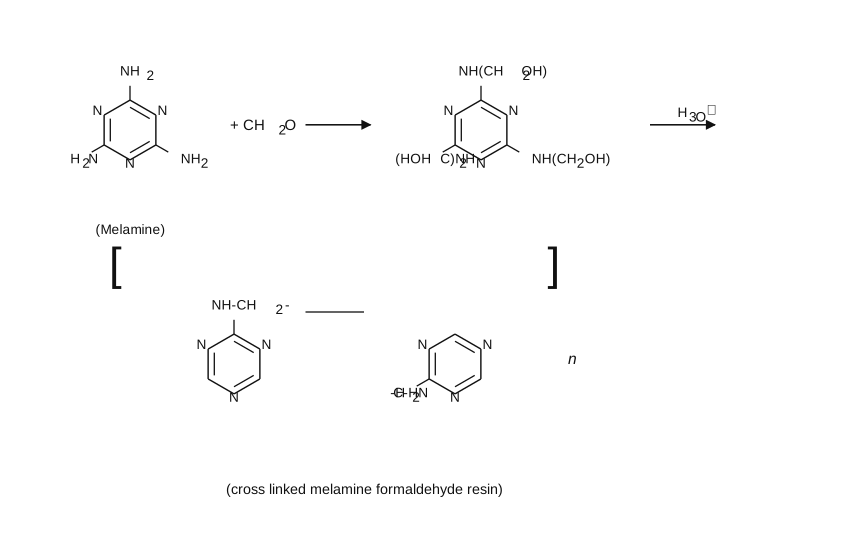
Bakelite, the oldest synthetic polymer, is the thermosetting resin obtained by reacting phenol with formaldehyde, catalyzed by acid or base, through a three-stage process (Fig. 15.3): stage one hydroxymethylates the phenol ring; stage two condenses these intermediates (eliminating water) into a linear, still-fusible moulding powder called novolac; stage three shapes novolac in a mould at 138-176 degC and high pressure, during which extensive further cross-linking creates the final rigid, insoluble, infusible three-dimensional network -- bakelite -- which has high tensile strength and can even substitute for glass; it is used for telephone instruments, kitchenware and electric insulators. Melamine-formaldehyde resin (Fig. 15.4) is formed similarly, by condensation polymerization of melamine (a triazine ring bearing three -NH2 groups) with formaldehyde, cross-linking through -N-CH2- bridges into a heat- a …
Drawn by us to help you understand the concept clearly, and verified to make sure it's accurate. For exams, practice from your textbook's own diagram.
What this figure shows. A three-stage reaction scheme. Stage 1: phenol (a benzene ring with one -OH group) reacts with formaldehyde (HCHO) in the presence of an acid or base catalyst, adding -CH2OH (hydroxymethyl) groups onto the phenol ring at positions ortho and para to the -OH group, giving hydroxymethylated phenol intermediates. Stage 2: these intermediates condense with each other, eliminating water between a ring's -CH2OH group and a neighbouring ring's free ring position, linking many phenol rings together through -CH2- bridges into a linear, still-fusible resin called novolac. Stage 3: on further heating novolac in a mould under pressure with more formaldehyde, additional -CH2- cross-links form between the linear novolac chains in …
Drawn by us to help you understand the concept clearly, and verified to make sure it's accurate. For exams, practice from your textbook's own diagram.
What this figure shows. A reaction scheme showing melamine (a six-membered triazine ring bearing three -NH2 amino groups at alternating ring positions) reacting with formaldehyde (CH2O) under acidic aqueous conditions: each -NH2 group is first hydroxymethylated to -NH(CH2OH), and these hydroxymethylamino groups then condense with -NH- groups on neighbouring melamine rings, eliminating water and forming -N-CH2- bridges. Because each melamine ring offers three reactive amino groups, the condensation links many rings together in three dimensions, producing the final rigid, heat- and moisture-resistant cros …