Chemistry · Ch 15 — Introduction to Polymer Chemistry
Polythene
Polythene
Polythene ('polyethylene' being its formal chemical name) is the IUPAC-named simplest and most widely used hydrocarbon thermoplastic, with the repeating structure -[CH2-CH2]n-; it is produced commercially in two distinct forms. Low density polythene (LDP) is made by polymerizing ethylene under very high pressure (1000-2000 atm) and moderately high temperature (350-570 K), using traces of oxygen or a peroxide as initiator; the mechanism proceeds by free-radical addition together with intramolecular hydrogen-atom abstraction (a growing chain's terminal carbon radical pulls a hydrogen atom off an internal carbon further back along the same chain), and this abstraction step is what creates branching along the chain. Because the resulting branched chains cannot pack closely, LDP ends up with a low density; its films are extremely flexible yet tough, chemically inert, moisture-resistant, a poor conductor of electricity, and melt around 110 degC, making LDP the material of choice for agricultural/irrigation pipes, cable insulation (including submarine cables), extruded films and sheets for packaging, and household items such as squeeze bottles. High density polythene (HDP), in contrast, is made by polymerizing ethylene using a Ziegler-Natta catalyst (a combination of triethyl aluminium with titanium tetrachloride) at a much lower temperature (333-343 K) and pressure (6-7 atm); this route gives an essentially linear, unbranched chain that packs closely, so HDP is crystalline, denser, stiffer, and has a higher m …
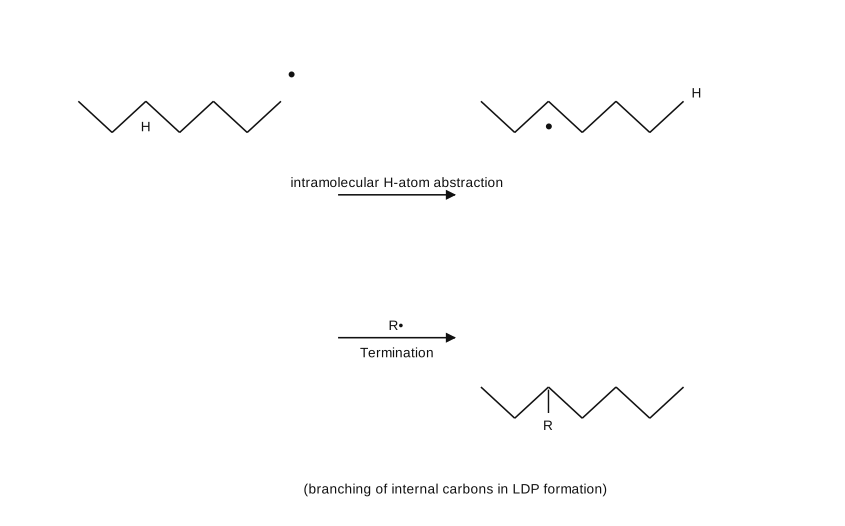
Drawn by us to help you understand the concept clearly, and verified to make sure it's accurate. For exams, practice from your textbook's own diagram.
Where LDP's branches come from. In the skeletal scheme (the book's own bond-line style) the terminal radical abstracts a hydrogen from an internal carbon of its own chain; the radical site moves inside, and when termination adds R there, the chain carries a branch. Many such events give low-density polyethylene its branched, loosely pack …