Chemistry · Ch 2 — Solutions
Reverse Osmosis
Reverse Osmosis
As mentioned earlier, osmosis is a flow of solvent through a semipermeable membrane into the solution. The direction of osmosis can be reversed by applying a pressure larger than the osmotic pressure.
Drawn by us to help you understand the concept clearly, and verified to make sure it's accurate. For exams, practice from your textbook's own diagram.
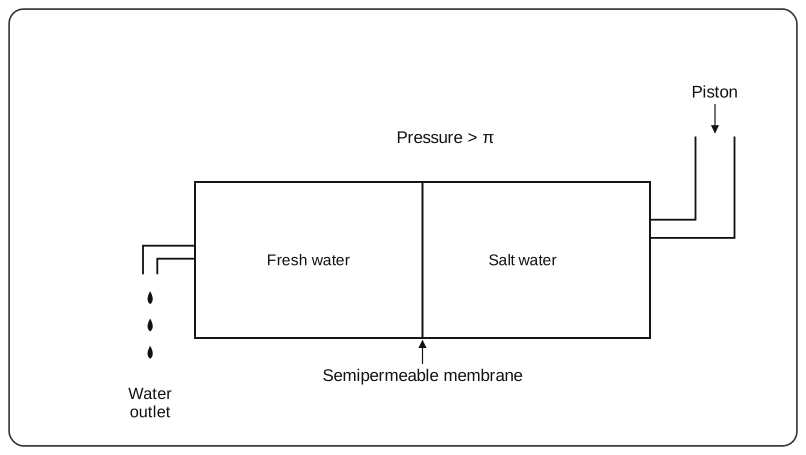
What this figure shows. A horizontal vessel divided by a central vertical Semipermeable membrane (labelled below, with an arrow pointing up at the partition) into a Fresh water compartment (left) and a Salt water compartment (right). A Piston enters from the top right, with the annotation Pressure > beside it: because the applied pressure exceeds the solution's osmotic pressure, pure water is forced from the salt-water side through the membrane into the fresh-water side and drips out of the Water outlet at the …
The pure solvent then flows from the solution into the pure solvent through the semipermeable membrane. This phenomenon is called reverse osmosis. Fig. 2.10 shows the schematic set-up for reverse osmosis: fresh water and salty water are separated by a semipermeable membrane. When a pressure larger than the osmotic pressure of the solution is applied …