Chemistry · Ch 8 — Transition and Inner Transition Elements
Position in the periodic table
Position in the periodic table
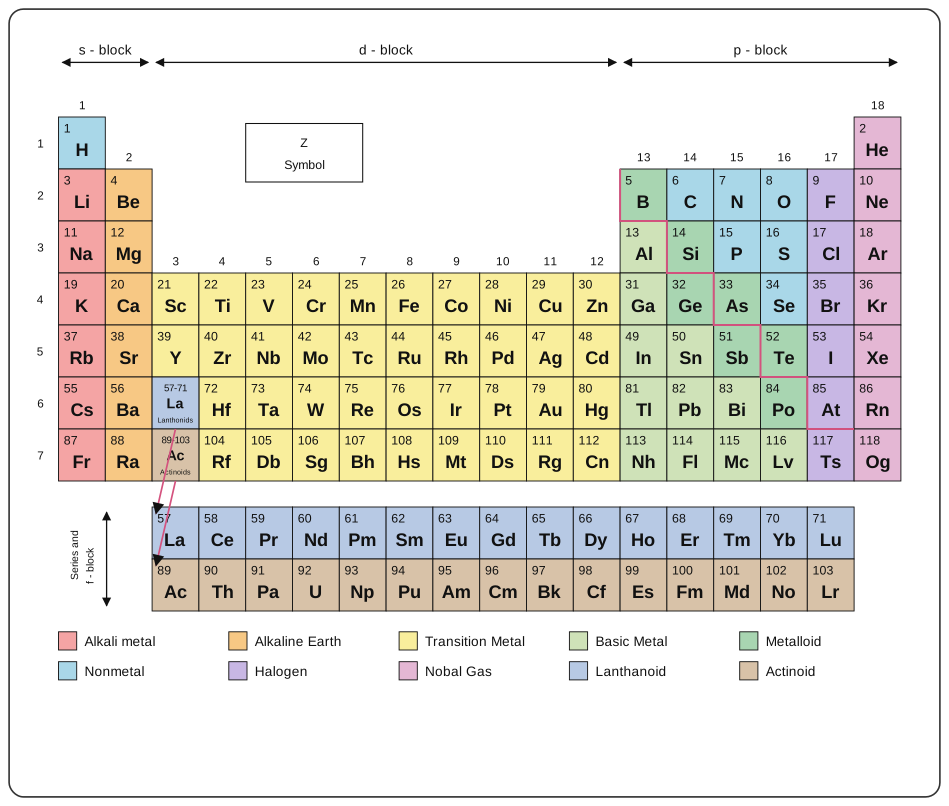
The transition elements are placed in periods 4 to 7 and groups 3 to 12; those constitute the 3d, 4d, 5d and 6d series (Fig. 8.1).
They are placed at the centre of the periodic table, with the s block on one side and the p block on the other. The electropositivity, reactivity and other properties show a gradual change from the s block to the p bl …
Drawn by us to help you understand the concept clearly, and verified to make sure it's accurate. For exams, practice from your textbook's own diagram.
Fig. 8.1 Position of d-block elements in the modern periodic table. The bracket arrows across the top mark the three in-table blocks - s - block (groups 1-2), d - block (groups 3-12) and p - block (groups 13-18) - and the side label Series and f - block points at the two separated rows below: La(57)-Lu(71) over Ac(89)-Lr(103). Each cell stacks the element's Z, Symbol, Name and Atomic Mass (the key box shows the order), and the ten legend colours classify every element from Alkali metal through Actinoid. The transition elements of this chapter are the coloured d-block middle - periods 4-7, groups 3-12 - exactly the placement section 8.2's text describe …