Q.List the functions of Nucleus.
You're viewing a preview — the full solution, concept, methods & PYQ mapping are locked.
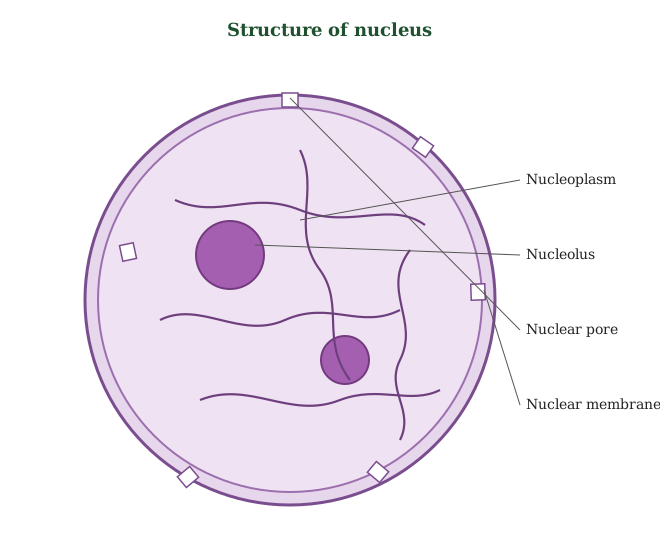
Start your 14-day free trial to unlock the full solution →The nucleus houses the cell's genetic material and directs all cellular activities, acting as the control centre for metabolism, growth, and heredity.
The important functions of the nucleus are:
-
Storage of genetic material: The nucleus contains the chromatin/chromosomes made up of DNA and associated histone proteins, which carry all the hereditary information of the cell.
-
Control of cellular activities: As the 'control centre' of the cell, the nucleus regulates metabolic activities by controlling which genes are expressed (turned on or off), thereby determining which proteins/enzymes are synthesised, and hence controlling the structure and function of the cell.
-
Site of DNA replication: Before a cell divides, its DNA must be duplicated; this replication takes place inside the nucleus during the S phase of the cell cycle.
-
Site of transcription: The nucleus is where DNA is transcribed into different types of RNA (mRNA, tRNA, rRNA), which are then processed and exported to the cytoplasm for translation.
…
Unlock everything free for 14 days
- Full step-by-step solutions
- Concept-first explanations
- Methods, shortcuts & mistakes
- PYQ mapping + timed mock tests
Full access for 14 days. No credit card required.