Question 36 of 56
Q.(a) The sense of taste is considered to be the most pleasurable of all senses. Describe the structure of that receptor involved with a diagram. OR
(b) What is Vermicomposting? List out the advantage of Vermicomposting.
Tamil Nadu DgeTamil Nadu HSC First Year (DGE) Board 2020Subjective· 5mImportance★★★★★
64% · 36/56 Questions
You're viewing a preview — the full solution, concept, methods & PYQ mapping are locked.
Start your 14-day free trial to unlock the full solution →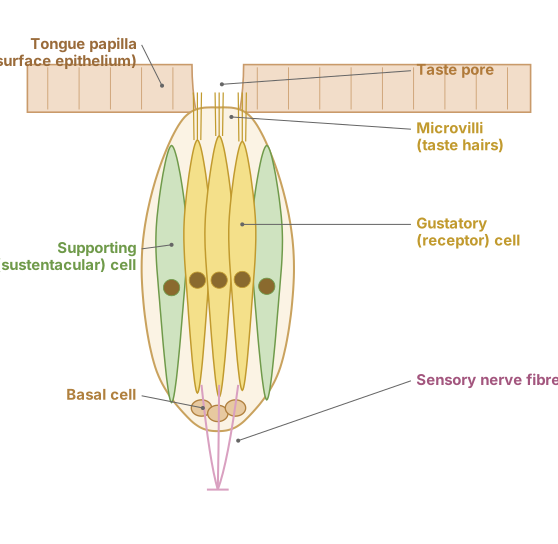
The receptor for taste is the taste bud, a small onion-shaped structure embedded mostly in the papillae of the tongue, containing gustatory receptor cells whose microvilli detect dissolved food chemicals and pass the signal on to sensory nerves — answering part (a) of this either/or question.
This question offers a choice between (a) the structure of the taste receptor, and (b) vermicomposting. Since (a) can be answered fully with a description, it is addressed here.
Structure of the taste receptor:
- Taste buds are the sensory receptor organs for taste, and they are mostly located on the tongue, embedded within raised structures called papillae — specifically the fungiform papillae (scattered over the front and sides of the tongue), circumvallate papillae (a V-shaped row at the back of the tongue), and foliate papillae (on the sides of the tongue). A smaller number of taste buds are also found on the soft palate, epiglottis and pharynx.
- Each taste bud is a small, barrel/onion-shaped structure made up of about 50-100 cells, of three main types:
- Gustatory (taste) receptor cells: elongated cells with microvilli (sometimes called "taste hairs") projecting into a small opening called the taste pore at the surface of the tongue. Chemicals from food, dissolved in saliva, bind to receptors on these microvilli, triggering a nerve impulse.
- Supporting (sustentacular) cells: surround and support the receptor cells within the taste bud. …
Unlock everything free for 14 days
- Full step-by-step solutions
- Concept-first explanations
- Methods, shortcuts & mistakes
- PYQ mapping + timed mock tests
Full access for 14 days. No credit card required.