Q.Describe the histological structure of human ovary with labelled diagram. What is menstrual cycle? (4+1) OR Describe with labelled diagram the origin and development of male gametophyte of angiosperm. Mention the function of two male gametes. (4+1)
You're viewing a preview — the full solution, concept, methods & PYQ mapping are locked.
Start your 14-day free trial to unlock the full solution →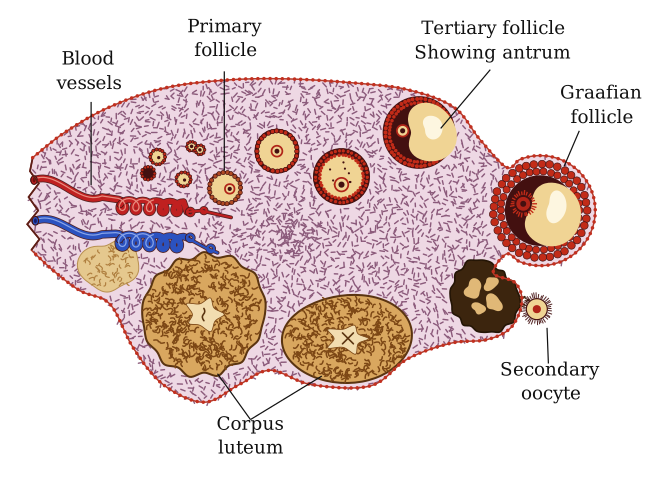
The ovary's histology shows a cortex (with follicles at all developmental stages) surrounding a vascular medulla; the menstrual cycle is the recurring ~28-day hormonal cycle of ovarian and uterine changes in reproductive-age women.
A note on the diagram: this batch was not given an actual figure/image of the ovary section, so a labelled diagram cannot be reproduced here. The structure is instead described in full anatomical/histological detail below, in the order it would normally be labelled.
Histological structure of the human ovary (in cross-section, from outside in):
- Germinal epithelium: a single outer layer of cuboidal epithelial cells covering the ovary's surface.
- Tunica albuginea: a dense, whitish connective tissue capsule lying just beneath the germinal epithelium.
- Cortex: the outer, thicker region beneath the tunica albuginea, containing ovarian (Graafian) follicles at every stage of development embedded in a stromal connective tissue — from primordial follicles (a primary oocyte surrounded by a single layer of flat follicular cells, present in large numbers), through primary and secondary follicles (with a growing oocyte and increasing layers of granulosa cells, plus a developing zona pellucida and theca layers), to the large, fluid-filled mature (Graafian) follicle ready for ovulation. After ovulation, the ruptured follicle transforms into the corpus luteum, a temporary hormone-secreting (progesterone) structure, which regresses to a corpus albicans if fertilisation does not occur.
- Medulla: the inner, central region of the ovary composed of loose connective tissue richly supplied with blood vessels, lymphatics and nerves that support the cortex.
Menstrual cycle: the cyclic, approximately 28-day reproductive cycle seen in human females from puberty to menopause, involving coordinated changes in both the ovary and the uterus, regulated by the hypothalamus-pituitary-ovarian hormonal axis. Its main phases are: …
Unlock everything free for 14 days
- Full step-by-step solutions
- Concept-first explanations
- Methods, shortcuts & mistakes
- PYQ mapping + timed mock tests
Full access for 14 days. No credit card required.