Political Science · Ch 2 — Rights in the Indian Constitution
Fundamental Rights in the Indian Constitution
Fundamental Rights in the Indian Constitution
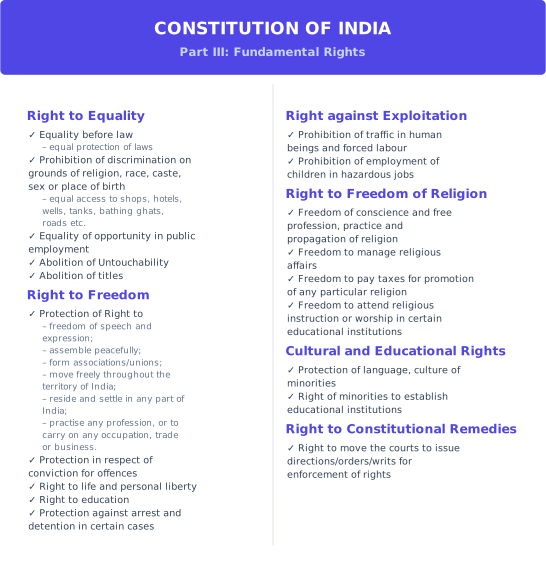
Part III of the Indian Constitution lays down the Fundamental Rights, India's
own Bill of Rights. As adopted in 1950 there were seven categories of Fundamental Rights; the Right
to Property was removed from this list by the 44th Constitutional Amendment (1978) and made an
ordinary legal right under Article 300A instead, leaving six categories of Fundamental Rights today:
the Right to Equality, the Right to Freedom, the Right against Exploitation, the Right to Freedom of
Religion, Cultural and Educational Rights, and the Right to Constitutional Remedies.
Drawn by us to help you understand the concept clearly, and verified to make sure it's accurate. For exams, practice from your NCERT textbook's own diagram.
Constitution of India, Part III: the six Fundamental Rights (Equality, Freedom, against Exploitation, Freedom of Religion, Cultural and Educational Rights, Constitutional Remedies) and their specific guarantees Own-illustrated for this platform from the real NCERT page's own facts (composition, labels, and content are recreated; the specific artistic rendering of any r …
Several features apply to all of them together. They are justiciable -- a person can go directly to
the Supreme Court, or to a High Court, if any of these rights is violated. Most of them bind the
state (the government, Parliament, and other public authorities), though a few -- such as the
abolition of untouchability and the prohibition of forced labour -- bind private individuals and
groups too. None of them is absolute: the Constitution itself allows the state to place "reasonable
restrictions" on most Fundamental Rights in the interest of things like public order, the security of …