Biology · Ch 9 — Control and Co-ordination
Autonomic Nervous System: Sympathetic and Parasympathetic
Autonomic Nervous System: Sympathetic and Parasympathetic
3. Autonomic Nervous System (ANS) : The autonomic nervous system (ANS) is a special set of peripheral nerves that regulates involuntary organs -- cardiac muscle, smooth muscle, glands and the like -- without conscious control. In its wiring, an impulse leaves the CNS along a preganglionic neuron, which synapses with an autonomic ganglion; from that ganglion, a postganglionic neuron's axon then extends on to the actual effector organ. The ANS has two structurally and functionally opposed divisions.
a. Sympathetic Nervous System (SNS) : The sympathetic nervous system (thoraco-lumbar outflow) originates in the thoracic and lumbar spinal cord (T1-L3) and is built around 22 pairs of sympathetic ganglia lying in two sympathetic cords alongside the spinal cord. Its preganglionic fibres are short and its postganglionic fibres long, and because those long postganglionic fibres release adrenaline and noradrenaline at the effector organ, sympathetic fibres are also called adrenergic fibres. The sympathetic system governs the body's response to emergencies (the fight-or-flight response), generally exciting and stimulating most organs -- except that it inhibits the digestive and excretory organs.
Use your brain power
Mr. Sharma suffered from a stroke and the right side of his body was paralysed. However his response was normal for the knee jerk reflex with either leg. Explain how and why. …
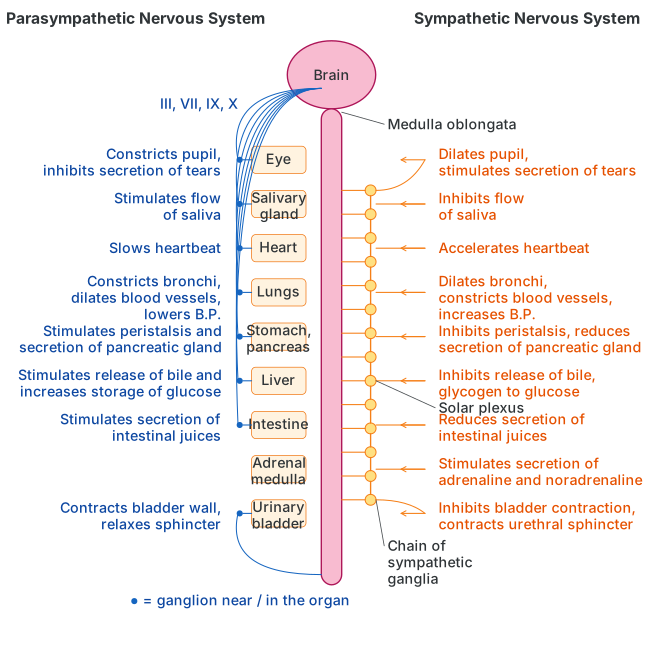
Drawn by us to help you understand the concept clearly, and verified to make sure it's accurate. For exams, practice from your textbook's own diagram.
What this figure shows. A side-by-side diagram contrasting the parasympathetic outflow (cranial nerves III, VII, IX, X and sacral nerves, with long preganglionic and short postganglionic fibres ending close to each organ) against the sympathetic outflow (a chain of sympathetic ganglia beside the spinal cord, plus the solar plexus, with short preganglionic and long postganglionic fibres), with arrows to the salivary glands, heart, bronchi, stomach/pancreas, liver, intestine, adrenal medulla, urinary bladder, blood vessels and eye showi …
Heart beat: Sympathetic -- increases. Parasympathetic -- decreases.
Blood vessels: Sympathetic -- constricts. Parasympathetic -- dilates.
Arterial B.P.: Sympathetic -- increases. Parasympathetic -- decreases.
Pupil of Eye: Sympathetic -- dilates. Parasympathetic -- constricts.
Gastrointestinal movements (stomach and intestine): Sympathetic -- retards peristalsis. Parasympathetic -- accelerates peristalsis. …