Biology · Ch 9 — Control and Co-ordination
Diencephalon: Epithalamus and Thalamus
Diencephalon: Epithalamus and Thalamus
iii. Diencephalon : The diencephalon is the part of the forebrain lying below the corpus callosum and above the midbrain, made up of the epithalamus, thalamus and hypothalamus, and enclosing a single, narrow cavity, the third ventricle (diocoel), which connects forward to the two lateral ventricles of the cerebrum through the foramen of Monro and backward, via the narrow duct of Sylvius (iter), to the fourth ventricle.
The epithalamus is the thin, non-nervous roof of the diencephalon; anteriorly it fuses with the pia mater to form the anterior choroid plexus, and from its dorsal wall a short pineal stalk connects to the pineal gland (once thought vestigial, now known to secrete melatonin, covered later in this chapter). The thick lateral walls of the diencephalon form the two thalami, made mostly of grey matter and linked to each other by the habenular commissure. The thalami act as the brain's relay centre: through the reticular activating system (RAS), they tra …
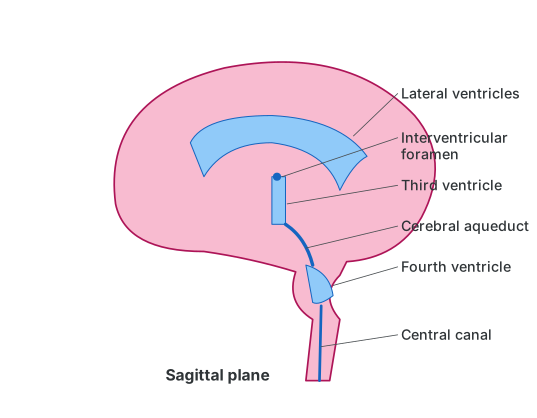
Drawn by us to help you understand the concept clearly, and verified to make sure it's accurate. For exams, practice from your textbook's own diagram.
What this figure shows. A schematic of the four fluid-filled cavities of the brain shown in sagittal and coronal views: the two C-shaped lateral ventricles (one in each cerebral hemisphere) opening into the single midline third ventricle through the interventricular foramen, the narrow cerebral aqueduct connecting the third ventricle down to the fourth ventricle in the hindbrain, and the fourth ventricle continuing into the narrow cen …