Biology · Ch 7 — Plant Growth and Mineral Nutrition
Plasticity
Plasticity
Plasticity is the capacity of a plant to be moulded or modelled -- its ability to produce different kinds of structures in response to different external (environmental) or internal stimuli at different phases of its life, rather than always producing one fixed form. A commonly cited example is heterophylly, where the same plant produces leaves of different shapes at its juvenile and mature stages, or under different environmental conditions -- seen in cotton, coriander and larkspur (Delphinium). In Ranunculus flabellaris (buttercup), heterophylly is triggered by the surrounding environment -- the plant produces finely divided leaves when submerged in water and broader leaves in air -- so this is called environmental heterophylly. In coriander and cotton, by contrast, the change in leaf form is governed more by the plant's own developmental (intrinsic) programme as it moves from the juvenile to the adult stage, independent of a specific external trigger, and this is called intrinsic plasticity.
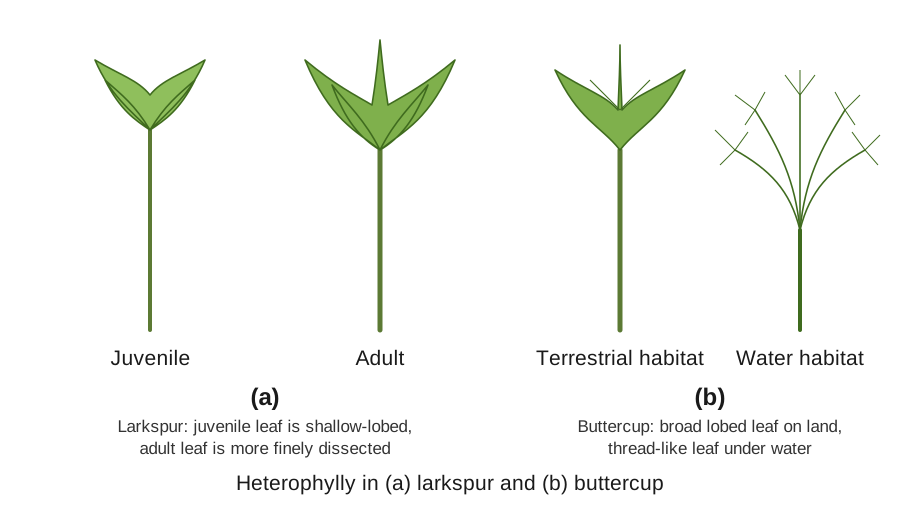
Drawn by us to help you understand the concept clearly, and verified to make sure it's accurate. For exams, practice from your textbook's own diagram.
What this figure shows. An illustration of heterophylly showing the same plant producing structurally different leaves at different life stages or in different habitats: juvenile leaves are shown distinct in shape from adult leaves, and leaves produced in a terrestrial habitat are shown distinct from those produced in a water habitat, four leaf forms in total. The figure makes visible the point made in the text: that one genetically identical plant can express markedly different leaf architecture …
Can you tell? …