Biology · Ch 2 — Reproduction in Lower and Higher Animals
Budding
Budding
Budding is a simple and common method of asexual reproduction, generally occurring when conditions are favourable. It is seen in a variety of animals, including coelenterates such as Hydra and corals, and in some colonial ascidians. In Hydra, a small outgrowth called a bud develops towards the basal (lower) end of the body.
Do you know?
Regeneration : a word that in biology refers to a process seen in all living organisms, from unicellular bacteria up to the most complex multicellular forms such as humans: the organism repairs, regrows or restores a lost or damaged part. Although it uses asexual cell processes, it is distinct from reproduction. A damaged Hydra regenerates the lost part; a wounded Planaria activates its cells and rebuilds the missing organ to its original state. Planarians also reproduce asexually by fragmentation: the anterior end pulls against the posterior end, a constriction forms in the middle and the body splits in two, each piece growing into a new Planaria, so two clones of the original are formed. …
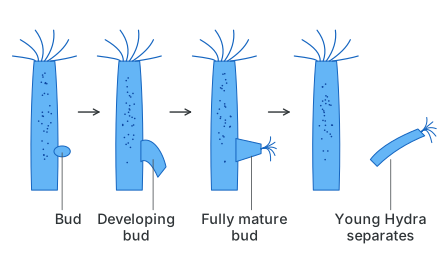
Drawn by us to help you understand the concept clearly, and verified to make sure it's accurate. For exams, practice from your textbook's own diagram.
What this figure shows. A sequence of diagrams tracing bud development in Hydra — beginning with a small bud emerging from the lower body wall of the parent, progressing through a developing bud stage, then a fully mature bud that has grown tentacles resembling a miniature Hydra, and finally showing the young Hydra completely separated from the …