Biology · Ch 1 — Reproduction in Lower and Higher Plants
Double Fertilization
Double Fertilization
Double fertilization is a fertilization mechanism unique to flowering (angiospermic) plants, first discovered by the Russian botanist Nawaschin in liliaceous plants such as Lilium and Fritillaria.
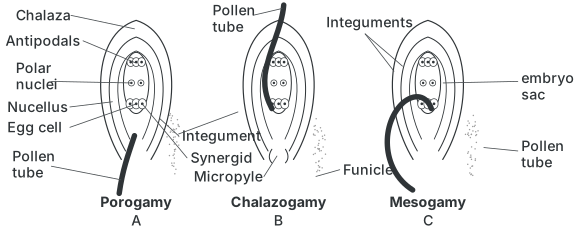
After a compatible pollen grain lands on the stigma, it germinates and produces a pollen tube that grows down through the tissue of the stigma and style, crosses the ovarian chamber, and finally penetrates the ovule. The direction of pollen tube growth toward the embryo sac is guided by chemical signals secreted by the synergids. Most commonly, the pollen tube enters the ovule through the micropyle, a route called porogamy; less commonly, it may instead enter through the chalaza (chalazogamy) or by piercing directly through the integuments (mesogamy). Whichever route it takes, the tube ultimately penetrates the embryo sac at its micropylar end.
Drawn by us to help you understand the concept clearly, and verified to make sure it's accurate. For exams, practice from your textbook's own diagram.
What this figure shows. This diagram shows the entry of the pollen tube into the ovule, illustrating the three possible entry routes labelled A, B, and C: porogamy, in which the tube enters through the micropyle; chalazogamy, in which it instead enters through the chalaza at the base of the ovule; and mesogamy, in which it pierces directly through the integuments. The pollen tube is shown travelling d …
The tip of the pollen tube, carrying the two non-motile male gametes, enters one of the two synergid cells. The synergid's watery contents are absorbed by the tube, which then ruptures and releases its contents, including the two male gametes, into the synergid. Because the non-motile male gametes must be physically ferried the whole distance inside the hollow pollen tube, this delivery mechanism is termed siphonogamy, and it is what makes fertilization possible for gametes that cannot swim on their own.
Once released, the two male gametes participate in two simultaneous fusion events, together constituting double fertilization:
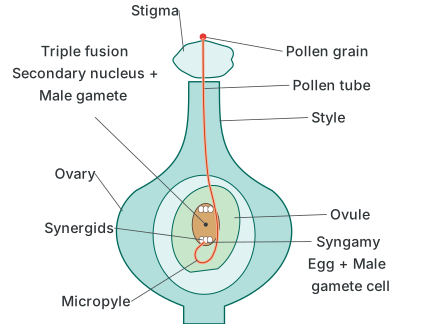
- Syngamy: One haploid male gamete fuses with the haploid egg cell to form a diploid zygote. This is described as generative fertilization, and the zygote goes on to develop into the embryo.
- Triple fusion: The second haploid male gamete fuses with the diploid secondary (definitive) nucleus of the central cell (itself already formed by fusion of the two polar nuclei) to produce a triploid primary endosperm nucleus (PEN), which develops into the triploid, nutritive endosperm tissue. This is described as vegetative fertilization.
Drawn by us to help you understand the concept clearly, and verified to make sure it's accurate. For exams, practice from your textbook's own diagram.
What this figure shows. This diagram depicts the process of double fertilization inside the ovule. It shows the pollen tube growing down through the stigma, style, and ovary to reach the embryo sac via the micropyle, then releasing its two male gametes: one male gamete is shown fusing with the egg cell, labelled syngamy, producing the diploid zygote, while the second male gamete is shown fusing with the diploid secondary nucleus formed from the two polar nuclei, labelled triple fusion, producing the triploid primary endosperm …
Because both delivered male gametes are used, one in syngamy, one in triple fusion, the overall event is termed double fertilization.
Significance of double fertilization
- It is a unique feature of angiosperms, and it ensures that the parent plant invests a seed with a food store only if the egg has actually been fertilized, rather than wastefully provisioning an unfertilized ovule.
- The diploid zygote develops into the embryo, which in turn grows into the new plant.
- The triploid primary endosperm nucleus develops into the nutritive endosperm tissue that sustains the growing embryo. …