Chemistry · Ch 12 — Aldehydes, Ketones and Carboxylic Acids
Electrophilic substitution reactions
Electrophilic substitution reactions
Aromatic aldehydes and ketones undergo the same broad family of electrophilic AROMATIC substitution reactions that any substituted benzene ring does -- specifically nitration, sulfonation, and halogenation. What is distinctive here is the DIRECTING effect of the carbonyl-bearing group itself: both the aldehydic (-CHO) group and the ketonic (>C=O) group are electron-WITHDRAWING from the ring, acting by both an inductive effect AND a resonance effect together. Because of this combined electron-withdrawal, both groups DEACTIVATE the ring specifically at its ORTHO and PARA positions (pulling electron density away from exactly those two ring positions more than from the meta position), and the net result is that the incoming electrophile in any of these substitutions ends up predominantly at the META position instead -- the exact opposite directing pattern from an electron-donating ring substituent. Worked example: benzaldehyde nitrated with co …
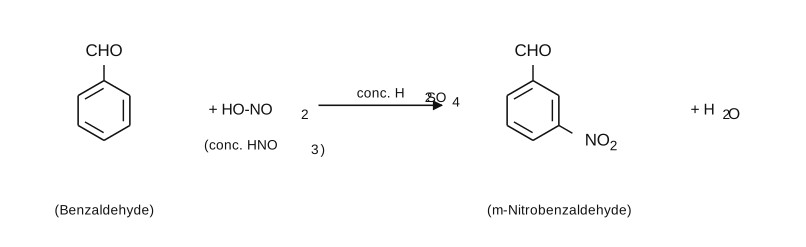
Drawn by us to help you understand the concept clearly, and verified to make sure it's accurate. For exams, practice from your textbook's own diagram.
Why meta? The electron-withdrawing -CHO group deactivates the ring and pulls electron density away from the ortho and para positions, so the nitronium ion attacks at the meta position — benzaldehyde with the nitrating mixture gives m-ni …