Chemistry · Ch 14 — Biomolecules
Classification of carbohydrates
Classification of carbohydrates
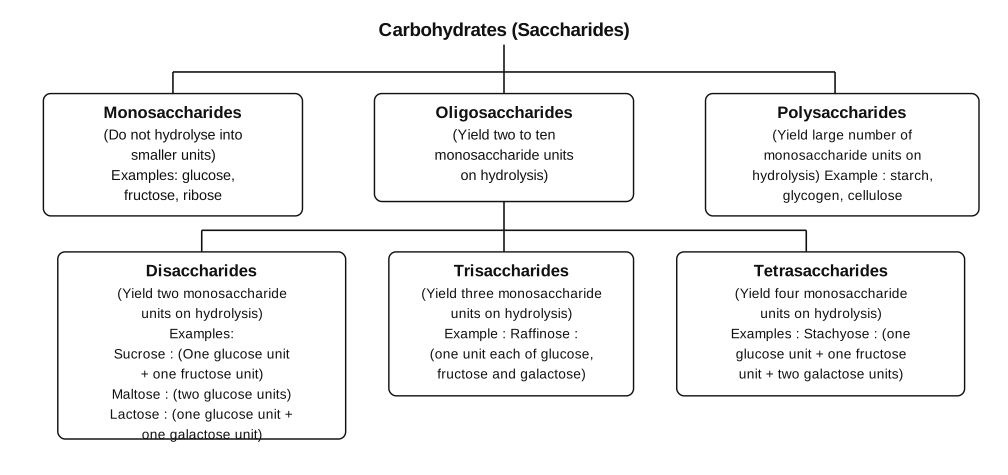
Carbohydrates fall into three broad groups according to how they behave on hydrolysis. Monosaccharides do not hydrolyse into any smaller carbohydrate units at all -- they ARE the smallest unit (examples: glucose, fructose, ribose). Oligosaccharides hydrolyse into a small number -- two to ten -- of monosaccharide units, and are further named by exactly how many units they yield: disaccharides (two units; the most common type of oligosaccharide, e.g. sucrose, maltose, lactose), trisaccharides (three units, e.g. raffinose) and tetrasaccharides (four units, e.g. stachyose), and so on up to ten. Polysaccharides hydrolyse into a very large number of monosaccharide units (examples: starch, glycogen, cellulose). About twenty different monosaccharides occur naturally as the building blocks of all these larger carbohydrates. Within disaccharides, the two monosaccharide units joined together may be identical (as in maltose, two glucose units) or different (as in sucrose and lactose, each built from two different monosaccharides). Among the polysaccharides, starch is the principal carbohydrate reserve of food grains and …
Drawn by us to help you understand the concept clearly, and verified to make sure it's accurate. For exams, practice from your textbook's own diagram.
What this figure shows. A branching classification chart. The root, 'Carbohydrates (Saccharides)', splits into three branches. Monosaccharides (do not hydrolyse into smaller units) list examples glucose, fructose, ribose. Oligosaccharides (yield two to ten monosaccharide units on hydrolysis) split further into: Disaccharides (yield two monosaccharide units) with examples sucrose (one glucose + one fructose unit), maltose (two glucose units), lactose (one glucose + one galactose unit); Trisaccharides (yield three monosaccharide units) with example raffinose (one unit each of glucose, fructose and galactose); and Tetrasaccharides (yield four monosaccharide units) with example stachyose (one glucose unit + one fructose unit + two galactose units). The third main branch, Polysaccharides (yield a large num …
Worked out. Three quick facts: about twenty different monosaccharides occur in carbohydrates; disaccharides are the most common oligosaccharides and their two monosaccharide units may be identical (e.g. maltose, two glucose units) or different (e.g. sucrose, lactose); and among polysaccharides, starch is the common carbohydrate reserve of food grains, cellulose is the structural constituent of the plant cell wall, and animals store their carbohydrate reserve as glycogen in …