Chemistry · Ch 14 — Biomolecules
Lactose
Lactose
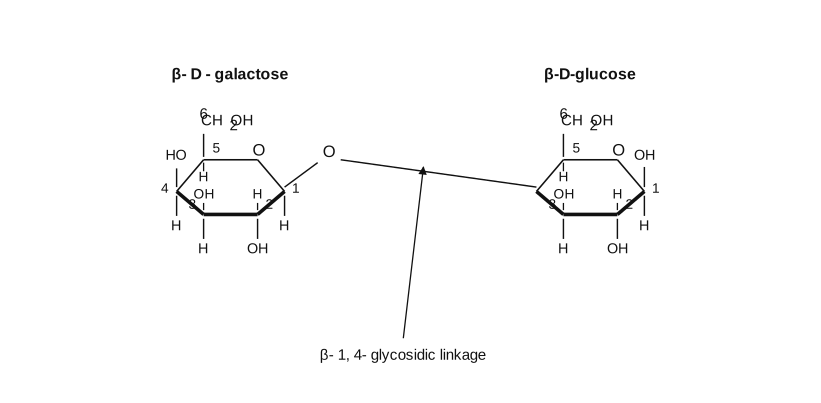
Lactose, C12H22O11, is the disaccharide naturally present in milk (both human and animal), and is built from one unit of D-galactose and one unit of D-glucose -- two DIFFERENT monosaccharides, unlike maltose. The glycosidic linkage runs from C-1 of beta-D-galactose (galactose's own anomeric carbon, in its beta-configuration) to C-4 of the glucose unit -- so the bond is named a beta-1,4-glycosidic linkage (note the beta-, distinguishing it from maltose's alpha-1,4 linkage even though both link at the 1,4 positions). Exactly as in maltose, the glucose unit's own hemiacetal group, at its C-1, is not involved in the linkage and remains free; lactose therefore also retains reducing character and gives a positive Tollens'/Fehling's test. Lactose is significant nutritionally as the principal sugar of milk, and its digestion (hy …
Drawn by us to help you understand the concept clearly, and verified to make sure it's accurate. For exams, practice from your textbook's own diagram.
What this figure shows. Two six-membered pyranose rings, numbered C-1 to C-6: a beta-D-galactose ring (left) joined through its C-1 anomeric oxygen by a beta-1,4-glycosidic linkage to C-4 of a beta-D-glucose ring (right). The glucose ring's own C-1 anomeric -OH is drawn free and unreacted, so lactose retains one exposed hemiacetal group -- consistent with it being a r …