Chemistry · Ch 14 — Biomolecules
Starch
Starch
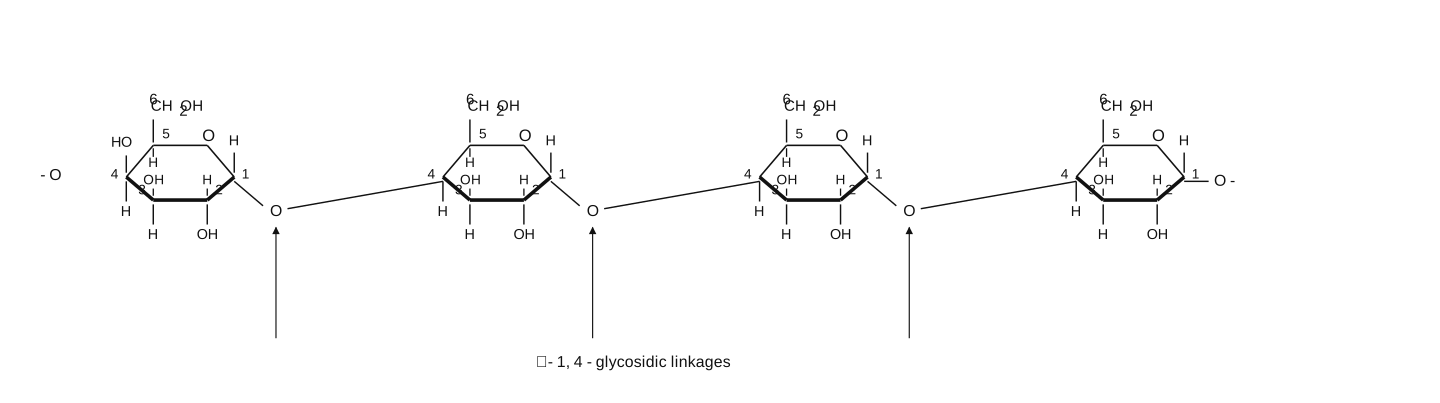
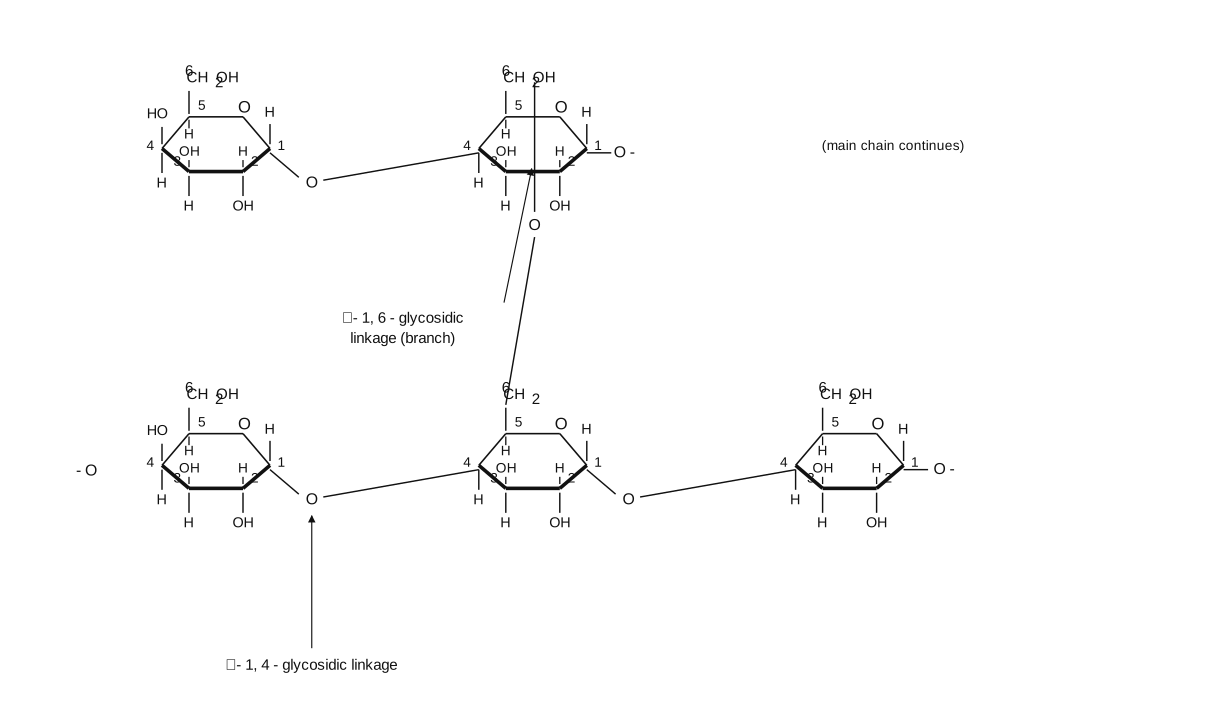
Starch, the plant storage polysaccharide, is itself a polymer built entirely of alpha-D-glucose units, but it is not a single uniform substance -- it is a mixture of two distinct components with different structures and properties. Amylose makes up the smaller fraction, 15-20% of starch; it is water-soluble, and its well-known deep-blue colour reaction with iodine is specifically an amylose property. Structurally amylose is an UNBRANCHED chain of roughly 200-1000 alpha-D-glucose units, every one of them linked to the next by an alpha-1,4-glycosidic linkage running the length of the whole chain, giving amylose a long, flexible, helically-coiling linear structure (it is this helical coil that traps iodine molecules inside it to produce the characteristic blue colour). Amylopectin makes up the larger fraction, 80-85% of starch; it is water-INsoluble, and gives a blue-VIOLET (not pure blue) colour with iodine, a subtly different shade that reflects its different, more compact packed structure. Structurally amylopectin is a BRANCHED-chain polysaccharide: within each individual chain segment, alpha-D-glucose units are linked by the same alpha-1,4-glycosidic linkages as in amylose, but at intervals along the molecule additional branch points occur, where a NEW side-chain is attached via an alpha-1,6-glycosidic linkage (using the C-6 -OH of a glucose unit, rather than the usual C-4 -OH, as the branch-point acceptor) -- it is this extensive alpha-1,6 branching, repeated at many points throughout the very large am …
Drawn by us to help you understand the concept clearly, and verified to make sure it's accurate. For exams, practice from your textbook's own diagram.
What this figure shows. A long unbranched chain of alpha-D-glucopyranose rings (each numbered C-1 to C-6), successive rings joined C-1 to C-4 of the next by alpha-1,4-glycosidic linkages, drawn as a repeating sequence of four or more rings to represent the full 200-1000-unit chain. All linkages in amylose are of this single alpha-1,4 type, giving the strictly linear (unbranched, coiling into a helix in solution) structure that is …
Drawn by us to help you understand the concept clearly, and verified to make sure it's accurate. For exams, practice from your textbook's own diagram.
What this figure shows. A branched network of alpha-D-glucopyranose rings: the main chains are built from alpha-1,4-glycosidic linkages exactly as in amylose, but at intervals an additional alpha-1,6-glycosidic linkage branches off from a ring's C-6 position to start a new side chain, shown explicitly in the figure where one ring is linked both C-1-to-C-4 (continuing its own chain) and via its C-6 to the C-1 of a branch-chain ring. This alpha-1,6 branching, repeated at many points along the molecule, is what makes amylopectin a highly branched, water-insoluble polysacch …