Chemistry · Ch 14 — Biomolecules
Maltose
Maltose
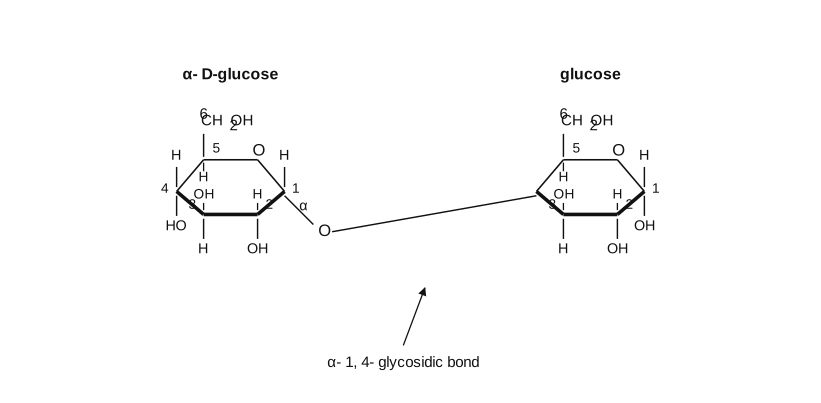
Maltose, C12H22O11, is a disaccharide built from two units of D-glucose, joined by a glycosidic linkage that runs from C-1 of one glucose ring to C-4 of the other. The glucose unit that contributes its C-1 (i.e. its own anomeric carbon) to the linkage must specifically be the alpha-anomer, alpha-glucopyranose -- so the bond is named an alpha-1,4-glycosidic linkage. The SECOND glucose ring's own hemiacetal group, at ITS C-1, plays no part in this linkage and is left completely free. Because one full, unreacted hemiacetal (potential aldehyde) group survives in the molecule, maltose retains reducing character and gives a positive Tollens' test, unlike sucrose. Maltose is itself produced by, and can be hydrolysed back down to, two units of free glucose, using either dilute acid or the specific enzyme maltase ( …
Drawn by us to help you understand the concept clearly, and verified to make sure it's accurate. For exams, practice from your textbook's own diagram.
What this figure shows. Two six-membered pyranose rings of alpha-D-glucose, numbered C-1 to C-6, joined by an oxygen bridge from C-1 of the first (left) ring to C-4 of the second (right) ring -- the alpha-1,4-glycosidic bond. The second ring's own C-1 anomeric -OH is drawn free and unreacted, which is why maltose (unlike sucrose) still has one exposed hemiacetal group and gives a positive …