Chemistry · Ch 10 — Halogen Derivatives
Dichlorodiphenyltrichloroethane (DDT)
Dichlorodiphenyltrichloroethane (DDT)
Dichlorodiphenyltrichloroethane (DDT) is a colourless, tasteless and odourless crystalline compound with insecticidal properties. It kills insects such as houseflies, mosquitoes and body lice, and historically it was used worldwide for controlling malaria and typhus by killing the mosquitoes and lice that spread these diseases. Exposure to high doses of DDT may cause vomiting, tremors or shakiness in humans, and laboratory animal studies have shown adverse effects of DDT on the liver and on reproduction. DDT is classified as a persistent organic pollutant: it is readily absorbed into soils and tends to accumulate progressively in the wider ecosystem rather than breaking down; when dissolved in oil or another liquid it is also readily absorbed through the skin, and because it is resistant to metabolism in the body, it accumulates in fatty tissue over time rather than being excreted. Because of all these adverse effects -- toxicity, persistence in the environment, and bioaccumulation in fatty tissue -- there is now a ban on the use of DDT in most countries, even though it was, for decades after its insecticidal effectivenes …
Worked out. DDT, the first chlorinated organic insecticide, was originally prepared/synthesised in 1873, but its effectiveness as an insecticide was not discovered until 1939, by Paul Muller of Geigy Pharmaceuticals in Switzerland; Muller was awarded the Nobel Prize in Medicine and Physiology in 1948 for this discovery. Use of DDT increased enormously worldwide after World War II, primarily because of its effectiveness against the mosquito that spreads malaria and the lice that carry typhus. Over time, many insect species developed resistance to DDT, and it was also found to be highly toxic to fish. DDT is not metabolised very rapidly by animals; instead it is deposited and stored in fatty tissue. The United States banned DDT's use in 1973, although it remained ( …
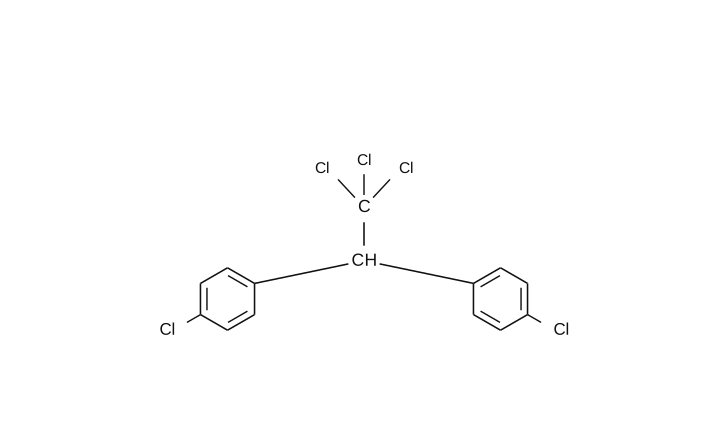
Drawn by us to help you understand the concept clearly, and verified to make sure it's accurate. For exams, practice from your textbook's own diagram.
The DDT molecule. A single CH carbon links a trichloromethyl group and two benzene rings, each bearing chlorine at the para position — dichloro-diphenyl-trichloroethane, the first …