Q.Draw and label the structure of mitochondria.
You're viewing a preview — the full solution, concept, methods & PYQ mapping are locked.
Start your 14-day free trial to unlock the full solution →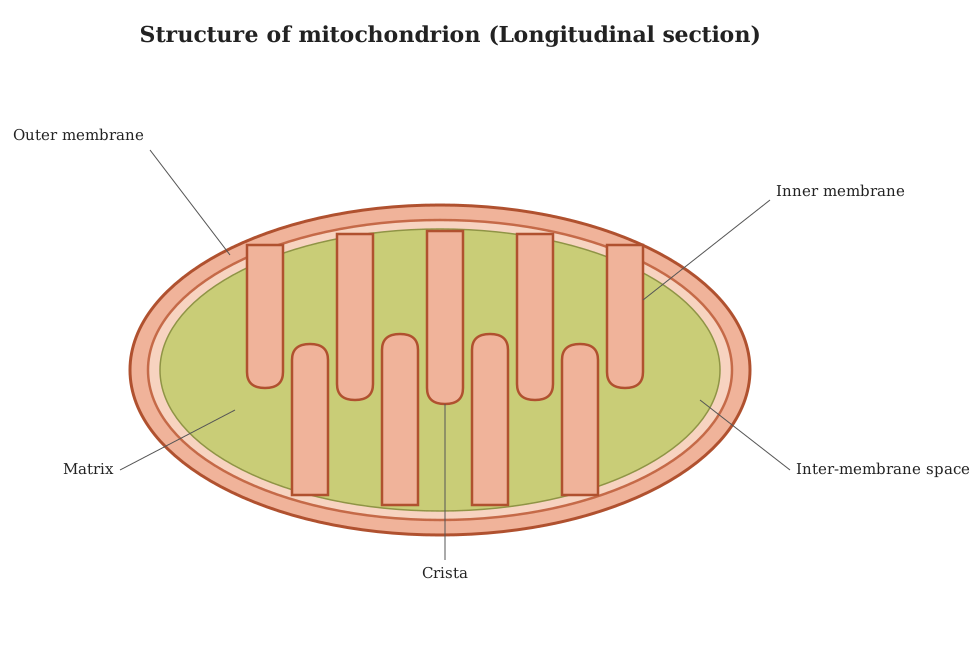
The mitochondrion is a double-membraned organelle whose inner membrane folds into cristae to maximise surface area for ATP synthesis, enclosing a matrix that carries its own DNA and ribosomes.
(This answer describes and labels the structure in words, since a hand-drawn figure cannot be rendered here.)
Outer membrane: a smooth, continuous membrane that forms the outer boundary of the organelle and is freely permeable to small molecules and ions.
Inner membrane: located just inside the outer membrane, it is highly folded into finger-like or shelf-like projections called CRISTAE, which extend into the matrix. This folding greatly increases the inner membrane's surface area. The inner membrane bears numerous small, stalked particles on its matrix-facing surface called OXYSOMES (F0-F1 particles/ATP synthase complexes), the actual sites of ATP synthesis during oxidative phosphorylation. The inner membrane is selectively permeable and houses the electron transport chain.
…
Unlock everything free for 14 days
- Full step-by-step solutions
- Concept-first explanations
- Methods, shortcuts & mistakes
- PYQ mapping + timed mock tests
Full access for 14 days. No credit card required.