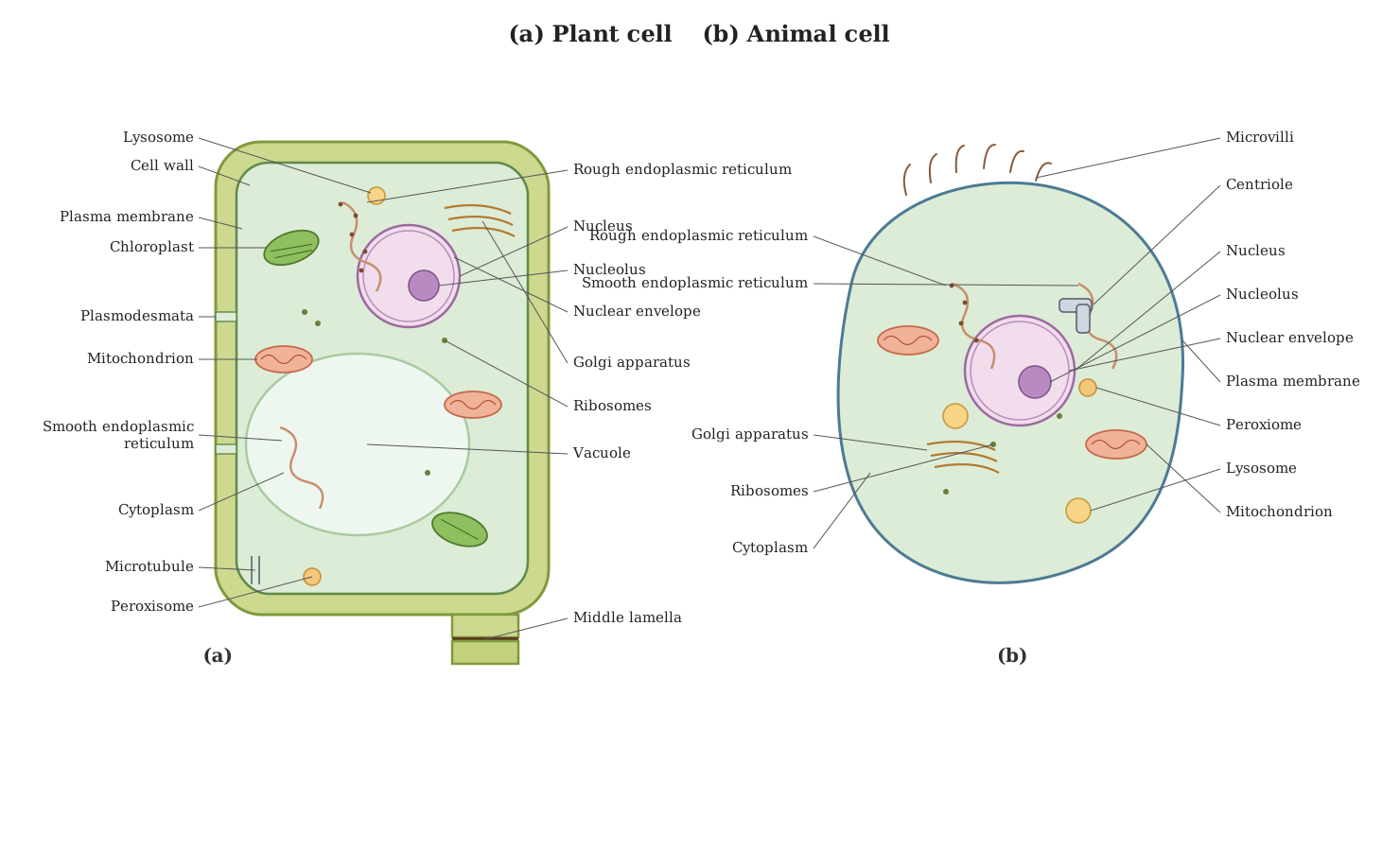
Q.Label the diagrams (A, B, C) and write down the details of the concept in your own words.
You're viewing a preview — the full solution, concept, methods & PYQ mapping are locked.
Start your 14-day free trial to unlock the full solution →Concept understanding — Eukaryotic Cell
A eukaryotic cell ('Eu' - true, 'karyon' - nucleus) has a genuine, membrane-bound nucleus, inside which its DNA is wound around histone proteins to form chromosomes. Eukaryotic cells are larger (roughly 10-100 um) and far more internally compartmentalised than prokaryotic cells, containing numerous membrane-bound organelles such as mitochondria, endoplasmic reticulum, Golgi apparatus, and, in plants and algae, chloroplasts; they use larger 60S+40S ribosomes, and divide by the regulated processes of mitosis and meiosis. Some of these organelles - notably mitochondria and chloroplasts - are believed, under the endosymbiont theory, to be t …
Unlock everything free for 14 days
- Full step-by-step solutions
- Concept-first explanations
- Methods, shortcuts & mistakes
- PYQ mapping + timed mock tests
Full access for 14 days. No credit card required.