Biology · Ch 9 — Control and Co-ordination
Adrenal Gland: Cortex and Medulla
Adrenal Gland: Cortex and Medulla
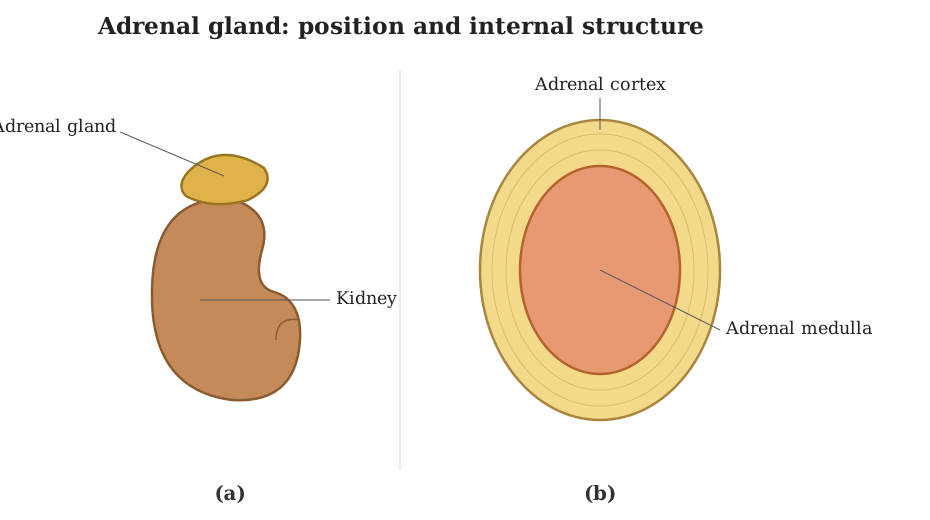
G. Adrenal gland / Suprarenal gland : The paired adrenal (suprarenal) glands sit on the upper border of each kidney and, being small, conical and yellowish, have a dual embryonic origin (mesoderm and ectoderm) reflected in their two histologically and functionally distinct regions -- an outer cortex and an inner medulla.
Drawn by us to help you understand the concept clearly, and verified to make sure it's accurate. For exams, practice from your textbook's own diagram.
What this figure shows. A wedge-shaped cross-section of one adrenal gland showing its outer fibrous capsule, then the adrenal cortex divided into its three concentric zones from outside in -- zona glomerulosa, zona fasciculata and zona reticularis -- surrounding the innermost adrenal medulla at the centre of the gland.
9.32: Histology of Adrenal gland. …
1. Adrenal cortex : The mesoderm-derived adrenal cortex secretes a whole family of hormones collectively called corticoids, organised into three concentric zones. The outer, thin zona glomerulosa secretes mineralocorticoids, which regulate sodium and potassium ion concentration and so control salt-water balance, blood volume and blood pressure; aldosterone, the main mineralocorticoid, is specifically described as the 'salt-retaining hormone' for its role balancing Na-K levels. The middle, thick zona fasciculata secretes glucocorticoids such as cortisol, which regulate carbohydrate, protein and lipid metabolism, raise blood glucose level, suppress antibody synthesis (making cortisol useful in treating allergy), and generally prepare the body to face physiological emergencies. The inner, thin zona reticularis secretes sex corticoids (gonadocorticoids), which in males help develop and maintain external sex characters; excess sex corticoids cause adrenal virilism and hirsutism (excess facial hair) in females and gynaecomastia (enlarged breast tissue) in males, and both androgens and estradiols are, in fact, produced by the adrenal cortex in both sexes. …