Biology · Ch 9 — Control and Co-ordination
Hormones of the Neurohypophysis: Oxytocin and ADH
Hormones of the Neurohypophysis: Oxytocin and ADH
Neurohypophysis : The neurohypophysis (posterior pituitary) does not make its own hormones; its pars nervosa simply stores and releases two hormones actually made by hypothalamic neurosecretory cells. Oxytocin stimulates contraction of the uterus during parturition (childbirth) and stimulates contraction of the mammary gland to eject/release milk, earning it the names 'birth hormone' and 'milk-ejecting hormone'. Antidiuretic hormone (ADH/vasopressin) stimulates water reabsorption in the distal convoluted tubule and collecting ducts of the kidney's uriniferous tubules, so decreasing urine volume and conserving body water, and it also raises blood pressure by causing vasoconstriction.
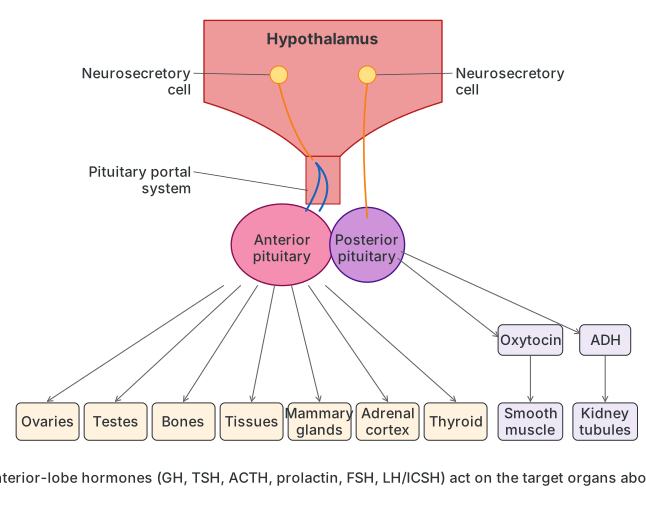
Drawn by us to help you understand the concept clearly, and verified to make sure it's accurate. For exams, practice from your textbook's own diagram.
What this figure shows. A schematic showing hypothalamic neurosecretory cells sending their hormones two ways: one set travels down axons directly into the posterior pituitary (neurohypophysis) for storage and release of oxytocin (acting on smooth muscle and mammary glands) and ADH/vasopressin (acting on kidney tubules), while a second set releases hormones into the pituitary portal system that carries them to the anterior pituitary, which in turn sends its own hormones through the general blood supply to distant targets -- ovaries, testes, bones, other tis …
When ADH is deficient, water reabsorption falls and urine output rises -- a condition called diabetes insipidus (in which, unlike diabetes mellitus, no glucose is lost in the urine); the resulting excessive urination in turn drives excessive thirst, a condition called polydipsia.
Pars intermedia : The poorly developed pars intermedia of the human pituitary secretes melanocyte stimulating hormone (MSH) in some lower vertebrates such as fish and amphibians, where it disperses melanin granules in melanocytes to control skin pigmentation; in humans this lobe and hormone play only a minor role.
Can you tell? …