Biology · Ch 9 — Control and Co-ordination
Pineal Gland
Pineal Gland
C. Pineal gland : The pineal gland is given off from the roof of the diencephalon and lies between the two cerebral hemispheres. It is sensitive to biochemical signals carrying information about light, and it secretes melatonin -- the 'sleep hormone', derived from the amino acid tryptophan -- which plays a central role in regulating the body's biological clock, the roughly 24-hour diurnal rhythm; melatonin helps maintain the normal sleep-wake cycle and also inf …
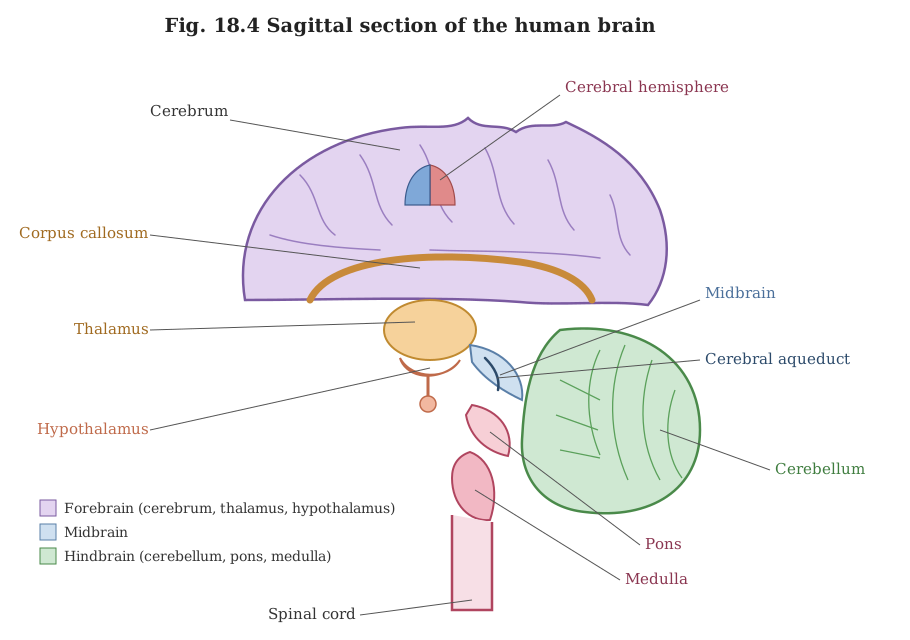
Drawn by us to help you understand the concept clearly, and verified to make sure it's accurate. For exams, practice from your textbook's own diagram.
What this figure shows. A midline diagram of the brain showing the small, cone-shaped pineal gland positioned behind the thalamus and above the brain stem, connected to the roof of the diencephalon by a short pineal stalk, alongside a structural formula of its hormone melatonin (a tryptophan derivative), captioned as the sleep hormone.
9.27: Pineal gland.
The book's Fig. 9.27 also prints the structural formula of melatonin, which is described in the text. …