Biology · Ch 7 — Plant Growth and Mineral Nutrition
Long Day Plants
Long Day Plants
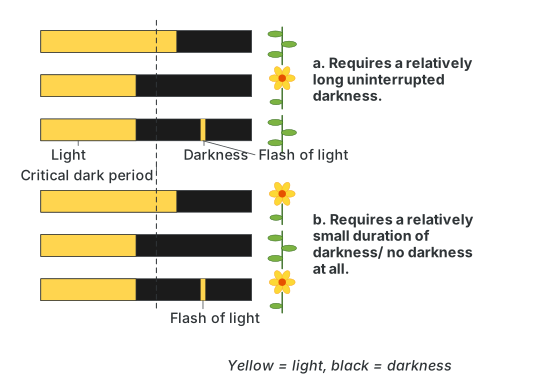
b. Long Day Plants (LDP) : Long Day Plants (LDP) typically flower during summer, and require a period of light longer than the critical photoperiod in order to flower. Because what actually matters to them is a sufficiently short dark period, LDPs are also called short night plants; unlike SDPs, when their (already short) dark period is interrupted by a brief flash of light, LDPs can still flower -- indeed this can even trigger flowering. Examples of long day plants in …
Drawn by us to help you understand the concept clearly, and verified to make sure it's accurate. For exams, practice from your textbook's own diagram.
What this figure shows. A diagram contrasting the photoperiodic requirements of the two response types using a light/dark timeline: panel (a) represents a plant (an SDP) that needs a relatively long, uninterrupted stretch of darkness -- the critical dark period -- to flower, and shows how inserting a brief flash of light partway through that dark period breaks the required continuity; panel (b) represents a plant (an LDP) that needs only a relatively small duration of darkness, or none at all, to flower. The diagram makes visually explicit the text's core point that both plant types are really responding to the length and continu …