Biology · Ch 2 — Reproduction in Lower and Higher Animals
Medical Termination of Pregnancy (MTP)
Medical Termination of Pregnancy (MTP)
Medical Termination of Pregnancy (MTP) : An intentional or voluntary termination of pregnancy before full term is called MTP or induced abortion; it is the intentional or voluntary termination of a pregnancy before full term. MTP is essential in cases of unwanted pregnancy or defective foetal development, and is safest during the first trimester of pregnancy; defective foetal development is examined using amniocentesis.
Amniocentesis is a procedure in which amniotic fluid containing foetal cells is collected using a hollow needle inserted into the uterus under ultrasound guidance, and the foetal chromosomes are then studied to detect abnormalities. A serious and dangerous misuse of amniocentesis is to determine the sex of the unborn child — if the foetus is found to be female, it is sometimes aborted, which is entirely illegal. To curb this misuse, the Government of India enacted the MTP Act in 1971, with strict conditions, and later the Medical Termination of Pregnancy (Amendment) Act 2017, under section 3 of the 1971 Act. The intent of the MTP Act is to reduce the incidence of illegal abortion and the resulting maternal mortality. Under the Act, only the consent of the woman whose pregnancy is being terminated is required, and pregnancy may be terminated:
- Within the first 12 weeks
- After more than 12 weeks but before 20 weeks
A registered medical practitioner's opinion is mandatory, stating that continuation of the pregnancy would involve a risk to the life of the pregnant woman, grave injury to her physical or mental health, or a substantial risk to the child.
Activity …
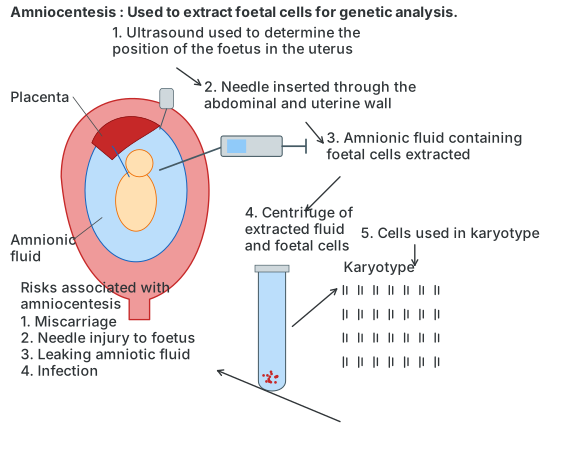
Drawn by us to help you understand the concept clearly, and verified to make sure it's accurate. For exams, practice from your textbook's own diagram.
What this figure shows. A five-step sequence: an ultrasound is first used to locate the foetus within the uterus; a needle is then inserted through the abdominal and uterine wall; amniotic fluid containing foetal cells is withdrawn; the extracted fluid and cells are centrifuged; and the separated cells are finally used to prepare a karyotype for genetic analysis — alongside a note listing the associated risks of the procedure: miscarriage, needle injury to t …