Biology · Ch 2 — Reproduction in Lower and Higher Animals
Temporary Methods
Temporary Methods
a. Temporary methods : These are of the following types:
1. Natural method / Safe period / Rhythm method : In the natural method, intercourse is avoided during the fertile part of the cycle; the week before and the week after menstrual bleeding is treated as the 'safe period,' based on the fact that ovulation normally occurs around day 14 of the cycle — this method has a comparatively high failure rate.
2. Coitus Interruptus or withdrawal : In this method the male partner withdraws his penis from the vagina just before ejaculation to avoid insemination; this too can fail, since pre-ejaculatory fluid may itself contain sperm capable of causing fertilization.
3. Lactational amenorrhea (absence of menstruation) : This method relies on the fact that ovulation does not usually occur during a period of intense lactation following childbirth, so as long as the mother fully breastfeeds the child, the chance of conception is very low — though this method too carries a high chance of failure.
4. Chemical means (spermicides) : Foams, tablets, jellies and creams used by the female partner are introduced into the vagina before intercourse, where they adhere to the mucous membrane and immobilise and kill sperm; they may cause allergic reactions and, like the methods above, can still fail.
5. Mechanical means / Barrier methods : With the help of barriers the ovum and sperm are prevented from physically meeting. These mechanical barriers are of three types:
i) Condom : It is a thin rubber sheath worn over the penis during copulation, preventing ejaculated semen from entering the female reproductive tract; it is simple, effective, has no side effects, is widely available free from the government (as 'Nirodh'), must be properly discarded after each use, and additionally protects against STDs and AIDS.
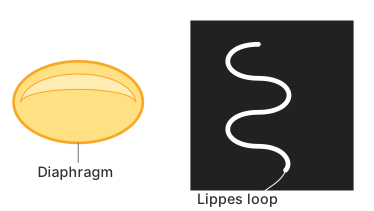
ii) Diaphragm, cervical caps and vaults : These are rubber devices used by the female, inserted to cover the cervix during copulation and block the entry of sperm.
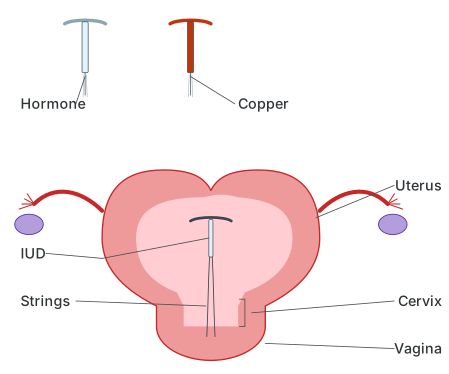
iii) Intra-uterine devices (IUDs) : These clinical devices are plastic or metal objects placed into the uterus by a doctor or trained nurse; they include the Lippes loop, copper-releasing IUDs (Cu-T, Cu-7, Multiload 375) and hormone-releasing IUDs (LNG-20, Progestasert).
Drawn by us to help you understand the concept clearly, and verified to make sure it's accurate. For exams, practice from your textbook's own diagram.
What this figure shows. Two barrier devices shown side by side — the diaphragm, a dome-shaped rubber cap sized to cover the cervix, and the Lippes loop, a flexible plastic device with a double 'S'-shaped curve designed to sit inside the uterine cavity. …
The Lippes loop is a plastic, double 'S'-shaped loop that attracts macrophages into the uterine cavity, where they increase phagocytosis of sperm and so act as a contraceptive; copper-releasing IUDs suppress sperm motility and fertilising capacity, while hormone-releasing IUDs make the uterus unsuitable for implantation and the cervix hostile to sperm, delaying pregnancy for a longer period. Drawbacks of IUDs include spontaneous expulsion, occasional haemorrhage, and chances of infection.
Drawn by us to help you understand the concept clearly, and verified to make sure it's accurate. For exams, practice from your textbook's own diagram.
What this figure shows. A T-shaped intra-uterine device positioned within the uterus, with its stem wound in fine copper wire and trailing strings extending down through the cervix into the vagina, illustrating how the device sits centred in the uterine c …
…
Drawn by us to help you understand the concept clearly, and verified to make sure it's accurate. For exams, practice from your textbook's own diagram.
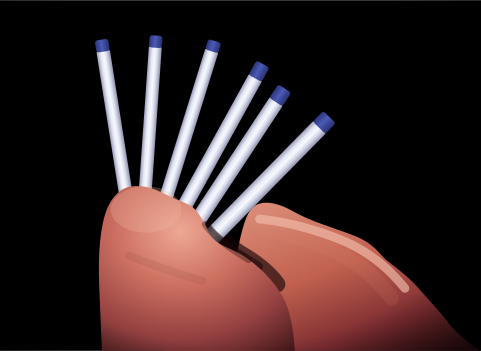
What this figure shows. The thin, matchstick-sized progestogen-releasing rods of a contraceptive implant, fanned out against a fingertip for scale; a single rod is implanted under the skin of the upper arm and prevents pregnancy for 3-4 years …