Biology · Ch 2 — Reproduction in Lower and Higher Animals
Oogenesis
Oogenesis
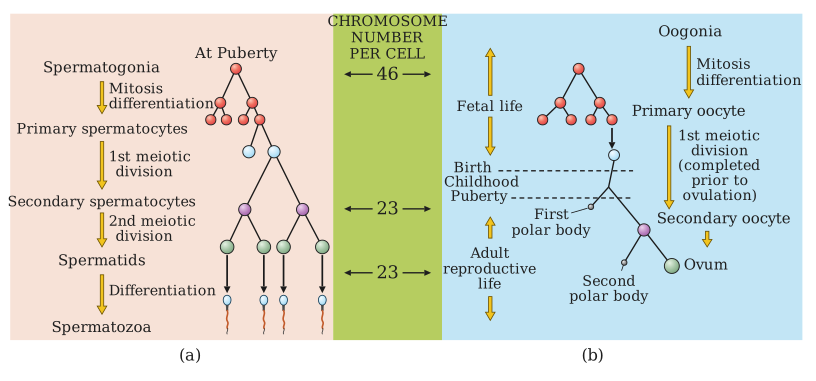
Oogenesis : It is the process by which the haploid female gamete — the egg or ovum — is formed from the diploid germinal epithelium of the ovary; like spermatogenesis, it involves meiosis (and, earlier, mitosis) and can be divided into three stages:
I. Multiplication phase
II. Growth phase
III. Maturation phase
I. Multiplication phase : The diploid primary germ cells (PGCs) of the ovary divide repeatedly by mitosis to form millions of diploid gamete mother cells, the oogonia; this entire process is completed during the embryonic stage of the human female, well before birth.
II. Growth phase : Some oogonia stop dividing and instead increase in size to form diploid primary oocytes, with cell organelles such as the endoplasmic reticulum, Golgi apparatus and mitochondria increasing in number.
III. Maturation phase : Oogenesis takes place in the ovaries and is initiated before the birth of the female baby; the diploid primary oocytes enter meiosis (meiosis I and meiosis II). …
Drawn by us to help you understand the concept clearly, and verified to make sure it's accurate. For exams, practice from your textbook's own diagram.
What this figure shows. The right half is oogenesis as the textbook's Fig. 2.11 draws it: the multiplication phase (mitotic divisions of the primordial germ cell to oogonia, 2n), the growth phase (primary oocyte, 2n) and the maturation phase (meiosis I giving the large secondary oocyte plus the first polar body, meiosis II giving the ovum plus the second polar body, all n); spermatoge …