Biology · Ch 1 — Reproduction in Lower and Higher Plants
Vegetative Reproduction
Vegetative Reproduction
Because plants reproducing through their vegetative parts produce offspring genetically identical to the parent, agriculture and horticulture deliberately harness this property to multiply superior or desired varieties quickly and predictably -- something seed-based sexual reproduction, with its genetic reshuffling, cannot guarantee. Several of these techniques do not occur spontaneously in nature and rely entirely on human intervention:
a. Cutting : A small segment of a vegetative organ, bearing one or more buds, is severed from the parent plant and induced to root independently. A stem cutting (rose, bougainvillea) regenerates roots from its cut base; a leaf cutting (Sansevieria) can regenerate an entire plant from just a leaf piece; and a root cutting (blackberry) sprouts a new shoot system from stored root tissue.
b. Grafting : Two different plants are physically joined so that their vascular tissues fuse and they subsequently grow and function as a single plant. The portion bearing more than one bud, taken from the desired variety, is called the scion; the rooted plant onto which it is joined is the stock. When only a single bud (rather than a stem segment) is grafted onto the stock, the technique is specifically called budding or bud-grafting. This is widely used to combine a hardy root system with a fruit-bearing or flower-bearing top, as in apple, pear, and rose.
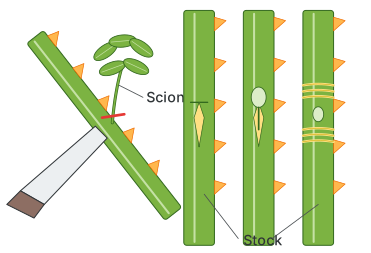
Drawn by us to help you understand the concept clearly, and verified to make sure it's accurate. For exams, practice from your textbook's own diagram.
What this figure shows. This figure illustrates the technique of grafting as practised in rose. It shows the stock, the lower rooted portion of one plant, joined to the scion, an upper stem piece bearing at least one bud taken from the desired variety, with the cut surfaces of the two aligned and bound together so that their vascular tissu …
…