Chemistry · Ch 14 — Biomolecules
Quaternary structure of proteins
Quaternary structure of proteins
The quaternary structure of a protein is the highest of the four structural levels, and applies only to proteins built from MORE than one separately-folded polypeptide chain: when two or more chains, each already possessing its own complete tertiary structure, come together and associate into one single, larger functional protein complex, the resulting overall assembly is called the protein's quaternary structure. Each individual polypeptide chain making up this larger assembly is, in this context, referred to as a subunit of the whole protein. The classic textbook example is haemoglobin, the oxygen-carrying protein of red blood cells: haemoglobin is built from four separate subunits (four individually-folded, haeme-group-containing polypeptide chains), which are held together in one compact, three-dimensional complex purely by intermolecular (non-covalent) forces between the subunits, not by any covalent linkage joining them. Crucially, haemoglobin can only carry out its biological function of binding and transporting oxygen when ALL FOUR of its subunits are correctly assembled together as the complete quaternary complex -- the individual subunits, on their own, do …
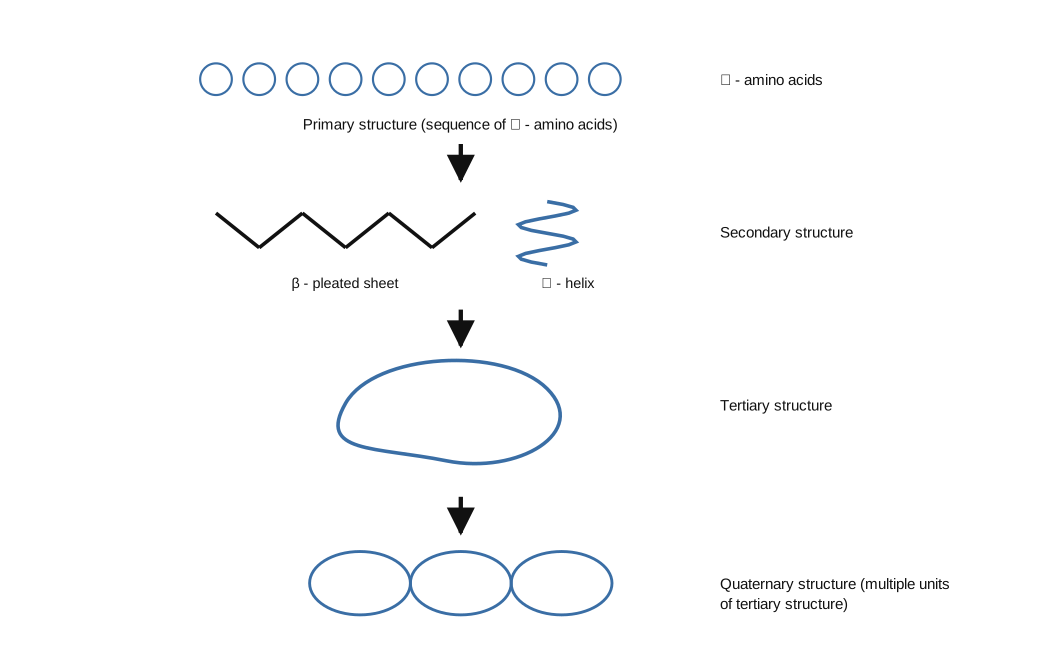
Drawn by us to help you understand the concept clearly, and verified to make sure it's accurate. For exams, practice from your textbook's own diagram.
What this figure shows. A summary diagram running left to right through all four structural levels. Primary structure: a simple string of alpha-amino-acid beads in sequence. Secondary structure: the same string shown folding locally into an alpha-helix segment and a beta-pleated-sheet segment. Tertiary structure: the alpha-helix and beta-pleated-sheet segments (plus connecting loops) shown folded together into one compact, irregular 3-D globular shape -- a single complete subunit. Quaternary structure: several copies of that same folded subunit (drawn as multiple compact globular shapes) shown clustered together into one larger multi-subunit complex, illustrating h …