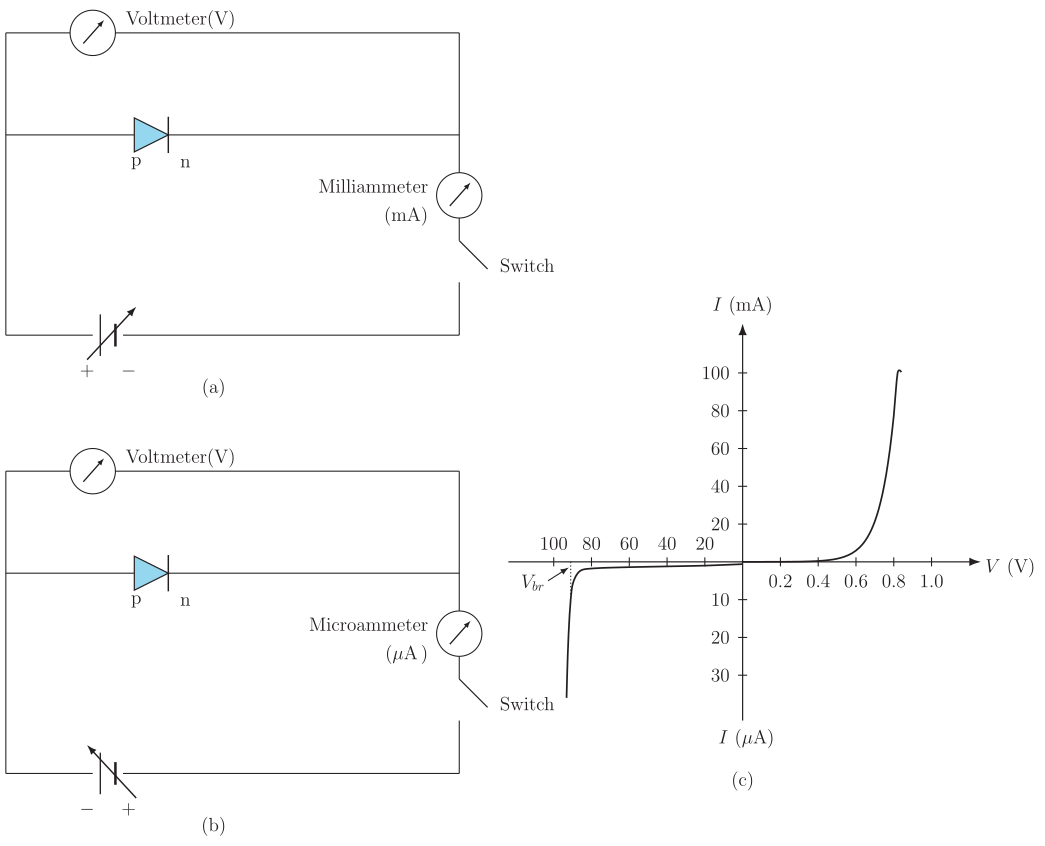
Q.Explain why the reverse saturation current of a p-n junction diode is nearly independent of the applied reverse voltage but increases strongly with temperature.
You're viewing a preview — the full solution, concept, methods & PYQ mapping are locked.
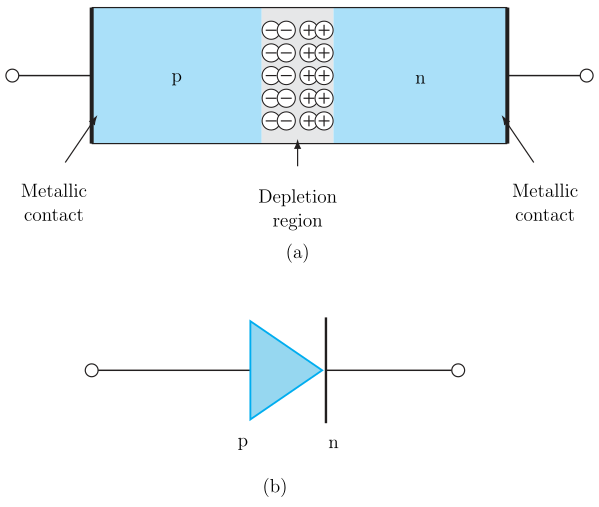
Start your 14-day free trial to unlock the full solution →Under reverse bias, majority-carrier current is blocked, and the small current that does flow is carried instead by MINORITY carriers -- the few holes thermally generated in the n-region and electrons thermally generated in the p-region -- which the reverse field actually assists across the junction. The SIZE of this current is set entirely by how many minority carriers are available to be swept across per second, which depends on the RATE of thermal generation, not on how large the reverse voltage is (once the field is strong enough to sweep across every minority carrier generated, increasing the voltage further sweeps across the SAME limited supply, no more). Thermal generation, however, is a strongly temperature-dependent process (exactly as for the intrinsic c …
Unlock everything free for 14 days
- Full step-by-step solutions
- Concept-first explanations
- Methods, shortcuts & mistakes
- PYQ mapping + timed mock tests
Full access for 14 days. No credit card required.