History · Ch 7 — Paths to Modernisation
The Story of Korea
The Story of Korea
The story of Korea in the late nineteenth and early twentieth centuries is one of a proud, ancient kingdom struggling to modernise under intense foreign pressure, only to lose its sovereignty to imperial Japan, and then fighting for decades to win it back. The section traces this arc from the internal decay of the Joseon Dynasty through colonial rule to liberation and the painful division of the peninsula.
Beginnings of Modernisation
Korea’s Joseon Dynasty ruled from 1392 to 1910, a span of over five hundred years. By the late nineteenth century, however, the dynasty was in deep trouble. Internally, it faced political and social strife — factional struggles at court, corruption, and growing discontent among the people. Externally, it came under mounting pressure from three directions: China, Japan, and the Western powers, each seeking influence or concessions.
Amid this crisis, Korea attempted a programme of modernisation. The reforms touched several areas of national life:
- Governmental structures — the administration was reorganised along more modern lines.
- Diplomatic relations — Korea sought to open and manage relations with foreign states on a more formal footing.
- Infrastructure — railways, telegraphs, and other modern facilities were introduced.
- Society — social institutions and practices were reformed to bring Korea in line with the modern world.
These reforms, however, could not save the dynasty. After decades of political interference in Korean affairs, imperial Japan annexed Korea outright as a colony in 1910. This act brought the Joseon Dynasty, which had lasted more than five centuries, to an end.
Colonial Rule and the Independence Movement
Japanese colonial rule was harsh and deeply resented. The Japanese suppressed Korean culture and forced Koreans to assimilate into Japanese ways — their language, customs, and identity were systematically attacked. This provoked anger across the country.
Koreans responded with a sustained independence movement. They:
- Demonstrated against colonial rule in protests across the country.
- Set up a provisional government to represent Korean aspirations abroad.
- Sent delegations to appeal to foreign leaders at major international meetings, including the Cairo, Yalta, and Potsdam conferences during and after the Second World War.
Japanese colonial rule lasted thirty-five years. It ended in August 1945 with Japan’s defeat in the Second World War. But the book is careful to stress that Korea’s independence was not simply a gift of that defeat — it was the continued efforts of independence activists, both inside Korea and abroad, that ensured Korea actually became free once Japan was beaten.
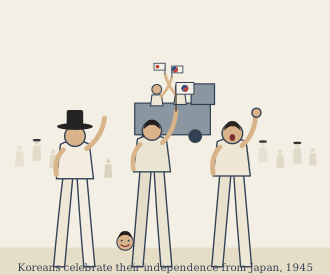
Drawn by us to help you understand the concept clearly, and verified to make sure it's accurate. For exams, practice from your NCERT textbook's own diagram.
The photograph captures a single, electrifying moment: a dense, jubilant crowd of Koreans celebrating their liberation from Japanese colonial rule in August 1945. The scene is one of collective release after thirty-five years of suppression. People are packed together, faces lifted, arms raised, many waving the Korean flag — the taegeukgi — which had been banned under colonial rule. The mood is unmistakably euphoric, a public explosion of joy and relief that had been pent up for decades.
What makes the image so powerful is what it does not show. There are no soldiers, no officials, no formal ceremony. This is not a state-organised event; it is a spontaneous outpouring from ordinary people. The crowd itself is the subject. Their raised fists and open-mouthed cheers speak to the end of forced assimilation, the restoration of their language and culture, and the collapse of a regime that had tried to erase Korean identity. The photograph freezes the exact instant when a colonised people reclaimed their nationhood. …
Liberation and Division …